

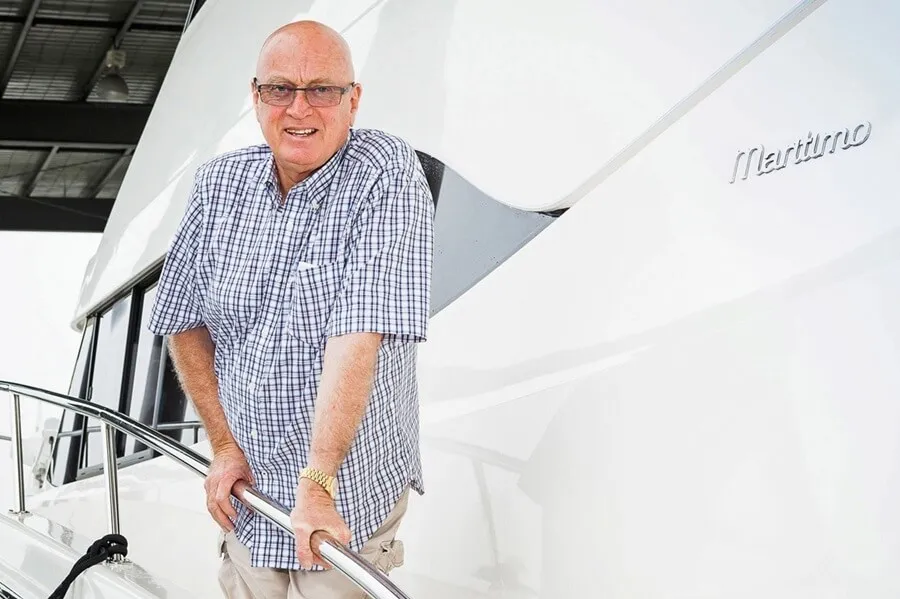
Now in your 80s, you developed famous Australian boating brands like Mariner, Riviera, Maritimo and lately purchased Caribbean. Your journey began as a teenager, sailing dinghies in Sydney’s northern Pittwater region?
My journey began with a foundation from my parents – a farmer and a schoolteacher – in the small town of Adelong, New South Wales. But it was a sailing trip on Sydney’s northern Pittwater as a teenager that sparked a passion for the water and working with my hands. That passion led me to a boat-building apprenticeship at 16. By 19, I’d already built my own boat. The fire was lit for what would become my life’s work.
What led you to start building boats called Mariners at Garden Street in Narrabeen, then in nearby Mona Vale?
In 1966, at just 21, my employer, Cedric Williams Snr, retired and gifted me the jigs, patterns and tools for the boats that we had been building. I took that opportunity and launched Mariner Cruisers. We built both motorboats and sailing yachts. By 1978, Mariner was Australia’s largest big boat manufacturer.
I sold the business to an Australian public company that year, but I stayed on for a year, which proved to be a challenging period. When I left, I stated my intention to buy it back for a nominal sum. Ten years later, when the company went into liquidation, I did just that.
These were both motor boats and sailing yachts, initially with wooden hulls, before fibreglass made its debut?
Yes, that’s right. In the early days, wooden hulls were the standard, but fibreglass emerged in the late 1940s and became more popular in the 1960s. Fibreglass was a game changer. More durable and resistant to common issues found in wood, like rot, warping and marine organisms, fibreglass made it much easier for owners to maintain their watercraft. It also allowed us to create more complex and streamlined hull shapes, resulting in faster and more fuel-efficient boats.
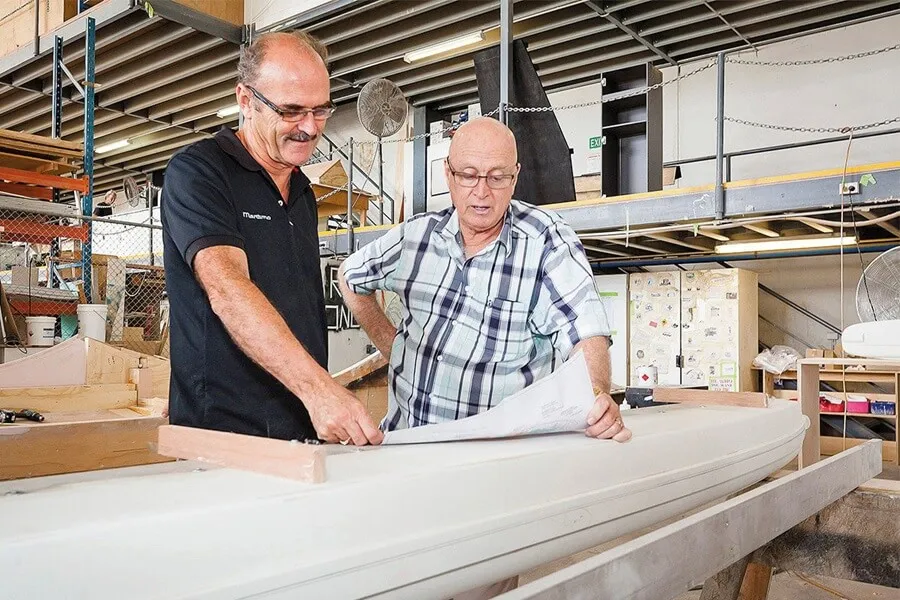
The Australian ‘Mariner’ brand I founded is separate from the American O’Day ‘Mariner’ brand, which also had its own transition to fibreglass. We made the strategic decision to adopt fibreglass to build robust and enduring boats that focused on durability and performance. This is a philosophy I still hold today.
Did you sell boats built abroad as well? Singapore-based Grand Banks CEO Bob Livingston later asked you to become a director of that successful company, but you declined?
Yes, I built Grand Banks under licence in Australia, and I also worked with them as a consultant for many years, developing new models and contributing to the engineering side. It was a valuable experience, but ultimately my passion has always been in building and steering my own brands, which is why I chose not to take on a directorial role.
What was your plan in moving to the Gold Coast, now an epicentre of production boat building in Australia, and founding Riviera Yachts? How many boats a year did the yard turn out during this period?
When I left Mariner, I wanted to create a new brand that would define the market. Australia’s Gold Coast was a developing area with huge potential, but not the epicentre of boat building it is today. It was a developing area, and I saw an opportunity to get in on the ground floor. I founded Riviera with just five employees in 1981, and we built eight boats that first year. The move was a strategic decision to create a culture of excellence in a region that had the space and potential to grow into a major marine hub.
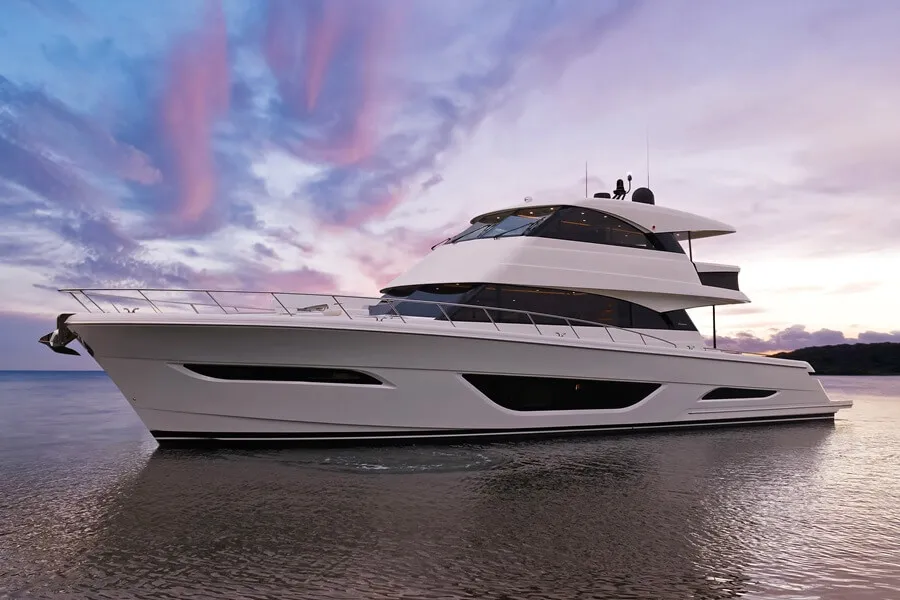
That same pioneering spirit later led me to establish Maritimo. I built on decades of experience to create a brand dedicated to long-range luxury motor yachts that embody performance, craftsmanship and innovation.
Your reported philosophy has always been to consult the owners, down to the smallest details, when designing new models. That has continued as a hallmark of Maritimo motor yachts?
Absolutely. At Maritimo, we call our design philosophy ‘Service Practicality’, and it remains central to everything we build. The idea isn’t just to make a boat easy for owners to fix; it’s about designing and engineering a boat so well that it rarely needs fixing in the first place. We focus on using proven materials, straightforward engineering and systems that are reliable and intuitive rather than having o
Read more from original article, all rights reserved Bill Barry-Cotter: How Australia Launched Unique Boating Brands
Leave a Reply