

Since the early part of the 20th century, the traditional watchmaking conversation has been dominated by what we wear on our wrists. It is hard to imagine that clockmaking and watchmaking are not synonymous today, or that the wristwatch is not the only form a wearable watch might take (perhaps we will return to pocket watch in a different story). The mechanical desk or standing clock – once the centrepiece of the home and the primary rhythm of daily life – seemed similarly destined to fade into the realm of antiques. However, a quiet but powerful renaissance is underway. In an era defined by digital ubiquity, the mechanical clock is being reimagined not as a tool for telling time, but as a spectacular form of kinetic art.
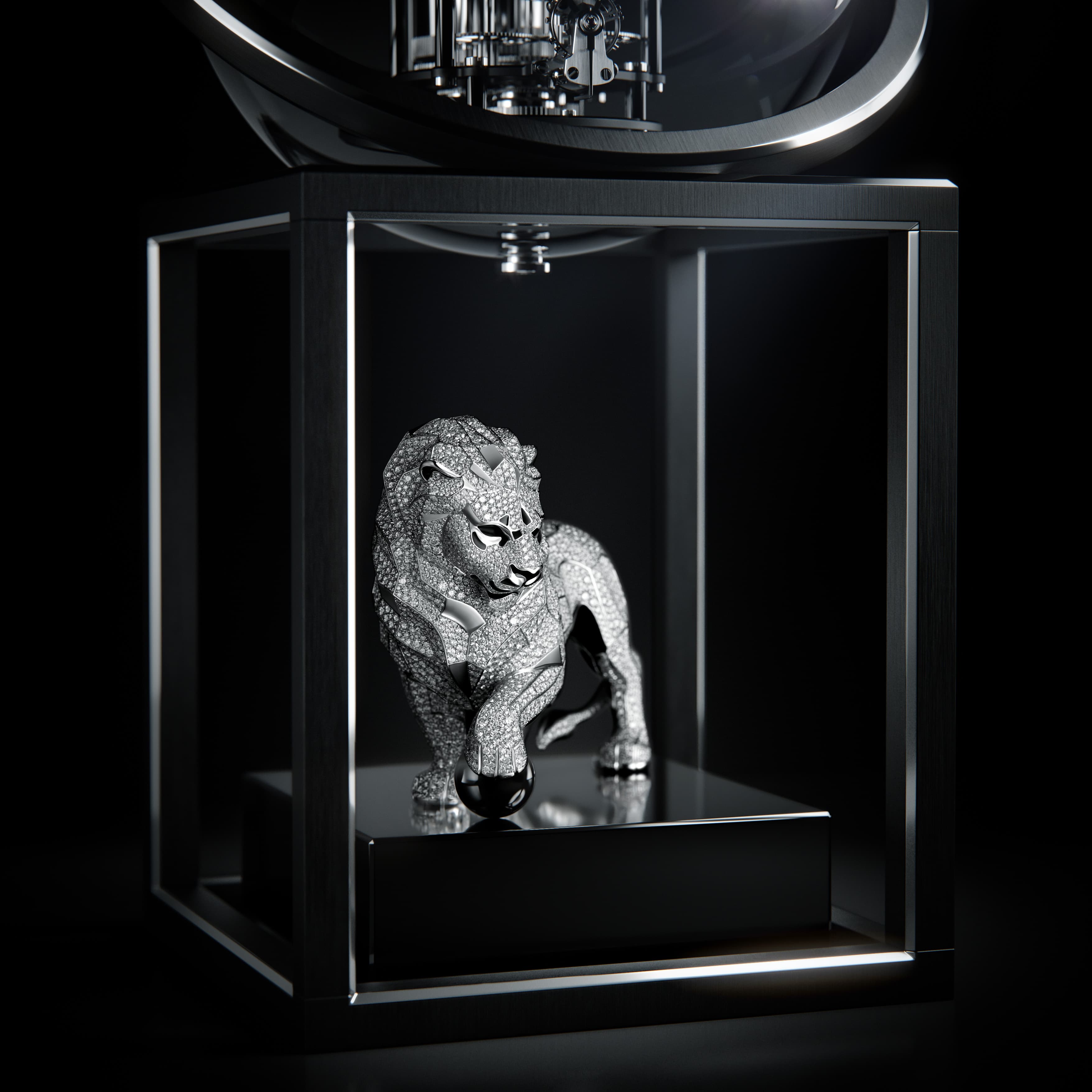
The strongest indicator of this revival is the re-entry of heavyweights into the arena. Luxury powerhouses such as Vacheron Constantin and Chanel have recently joined the race, deploying their sophisticated capabilities to win over collectors. Their contributions are nothing short of monumental: Vacheron Constantin’s astronomical marvel La Quete du Temps and Chanel’s Couture O’clock and Lion Astroclock were years in the making, arriving with a functional and aesthetic impact that has made waves across the industry.
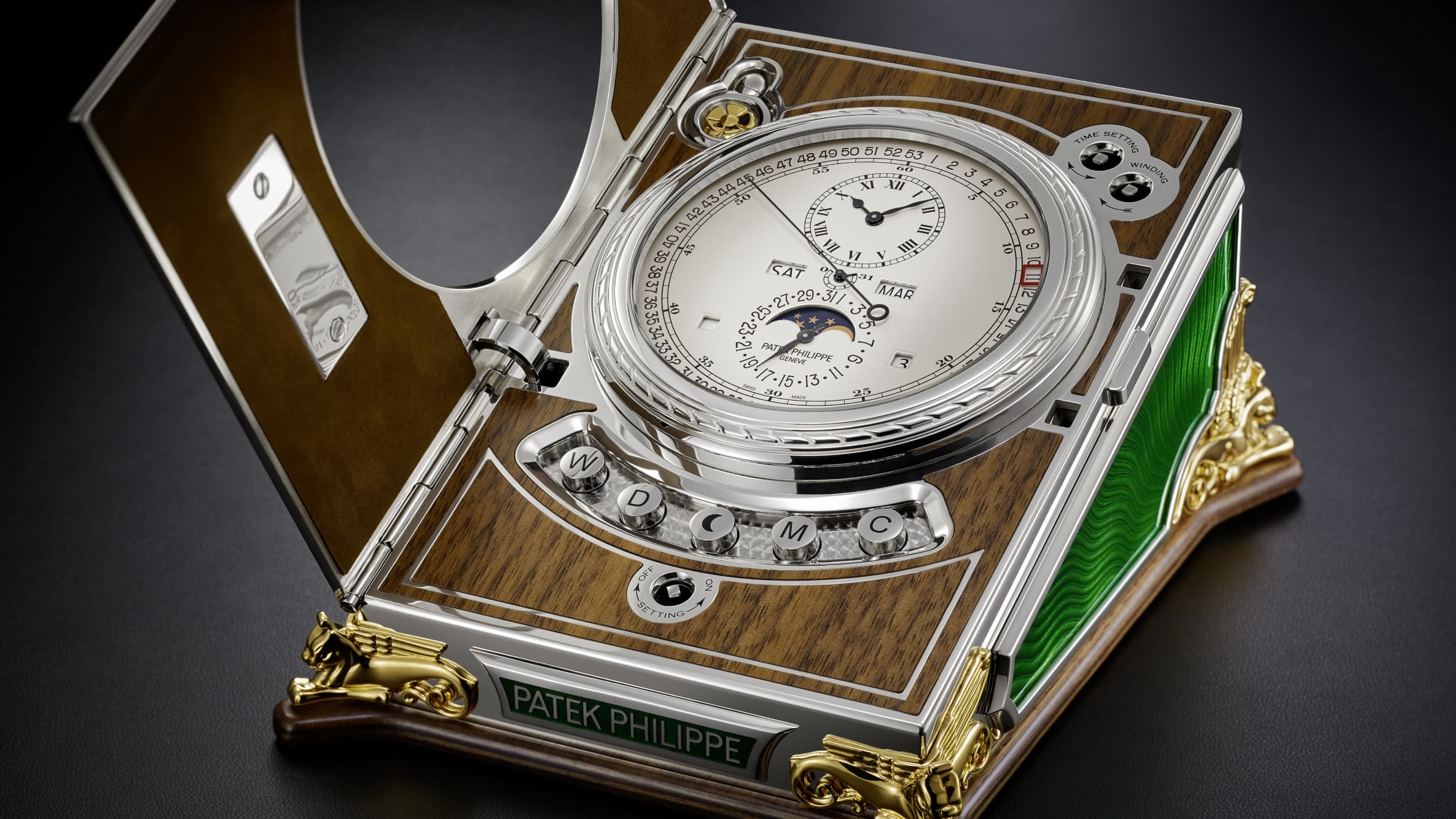
Similarly, the Naissance de l’Amour automaton from Van Cleef & Arpels stands as a coveted example of métiers d’art, adding a “cherry on top” to this growing sector. It is perhaps no accident that Patek Philippe included a desk clock in its slew of novelties last year, Ref. 27000M. This clock was the brand’s standard bearer at Watches and Wonders Geneva, and we covered it multiple times. That being said, to call this a ‘growing sector’ is perhaps a little over-the-top but it is all relative.
The resurgence we are concerned with here signals a shift in the definition of high-end collecting. Today’s artful clocks have emerged as ideal staging grounds for the elite to express their artistic passion, offering a tangible, mechanical counterpoint to a digitised world. While historical patrons such as Henry Graves Jr. and James Ward Packard once commissioned exquisite timepieces from Patek Philippe, the modern collector is also looking for something new: objects that blend traditional complexity with contemporary daring.
While the established maisons provide validation, the true energy of this movement often stems from a smaller and powerful group of independent creators. These artisans are not merely preserving a craft; they are exploding its boundaries. From offering novices the chance to build their own movements to creating “minute munching” monsters, these independent makers are proving that the static object can be the most dynamic force in horology. Leading this charge is a creator who works not in a factory, but in a world entirely his own.
MIKI ELETA: THE KINETIC ARTIST
When discussing high-end clocks, instead of focussing on brand creations, industrial production, and precision instruments, the discerning collector cannot overlook Miki Eleta, a possible genius in the art of clockmaking. Eleta has developed an inviting world where complicated luxury is the essence of life, going a long way towards supporting a revival of clockmaking.
Eleta’s journey began with an unexpected encounter. A sceptic questioned his ability to learn and work accurately, from the perspective of making a timekeeping instrument. This was a challenge that became a life-changing experience. “From then on, my entire focus was on proving him wrong by developing a grand clock of high calibre in the first place,” Eleta recalled.
The path was not easy and, in fact, was cluttered with unknowns. At the time, Eleta was creating kinetic art and possessed some mechanical knowledge, but he admitted, “I still had a lot to learn about building a proper clock.”
Eleta’s clocks are “purely an open canvas” of his realised thoughts; they are intricately playful creations that are (literally) extraordinary inventions. “I love my freedom and feel inspired by it every second… helping me to put my ideas into practice on a scale that’s reflective of complex magnificence,” he said.
Unlike manufacturers who rely on industrial environments, Eleta works in his Zurich atelier without CNC machines or contemporary design tools. “I create every component for my clocks by hand,” he explained. “I create art inspired by certain events, cultures and emotions.” He utilises traditional materials such as brass and steel for their specific properties, alongside precious metals, gemstones, shells, and glass.
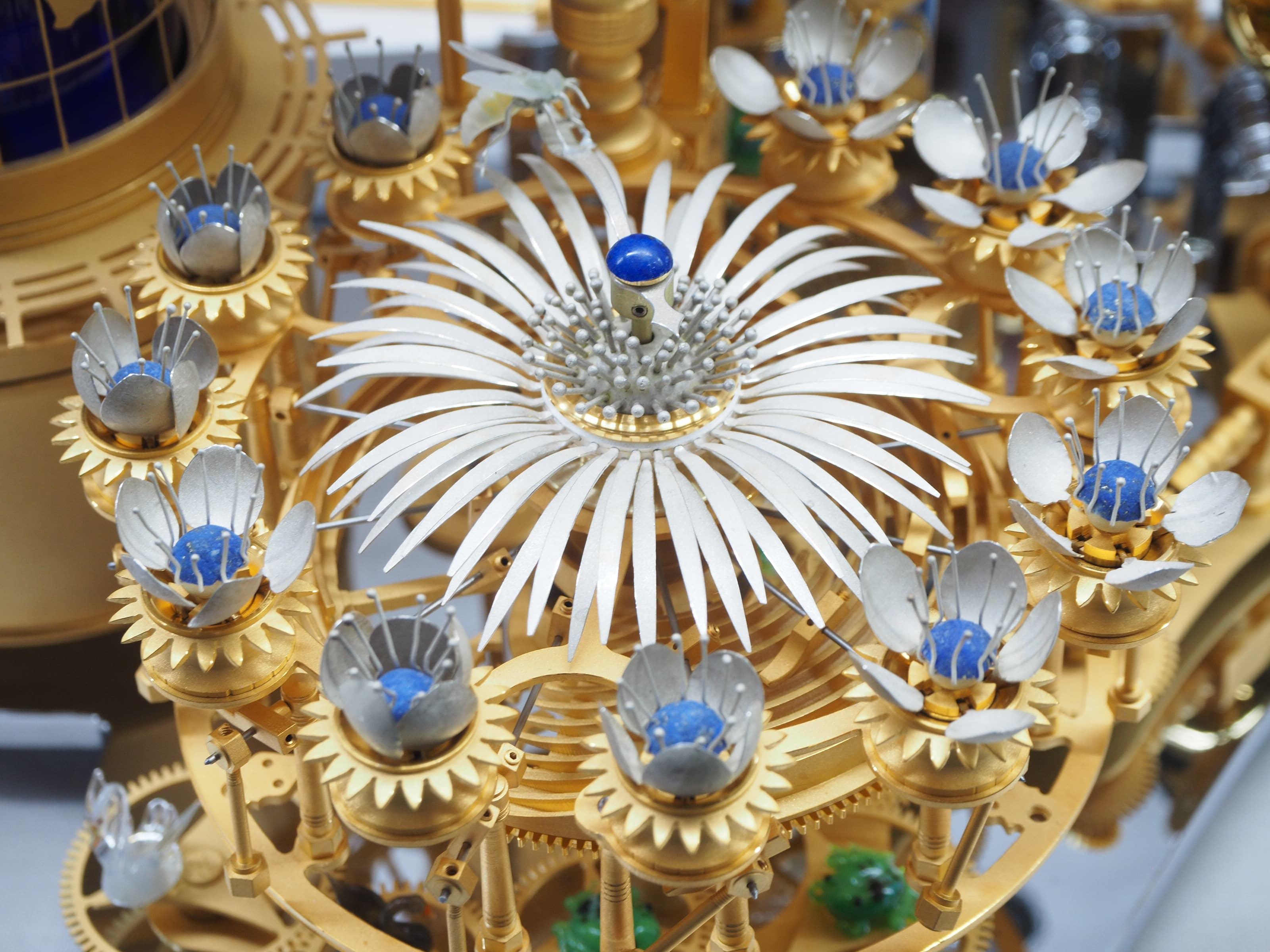
Nature remains his primary muse, as seen in the Natuhrzeit clock in these pages. “I believe in living close to nature as it provides everything one needs to stay creatively sharp,” said Eleta. He cited the evening primrose, whose petals open in the twilight, as a fascination. “The physical mechanism involved in the opening of the petals is interesting. As I see it, I ask myself questions like: Why does this phenomenon happen? Could I implement it in a clock with absolute precision?”
Eleta’s work requires originality to convince collectors of their worth, in his opinion. Here are just a few.
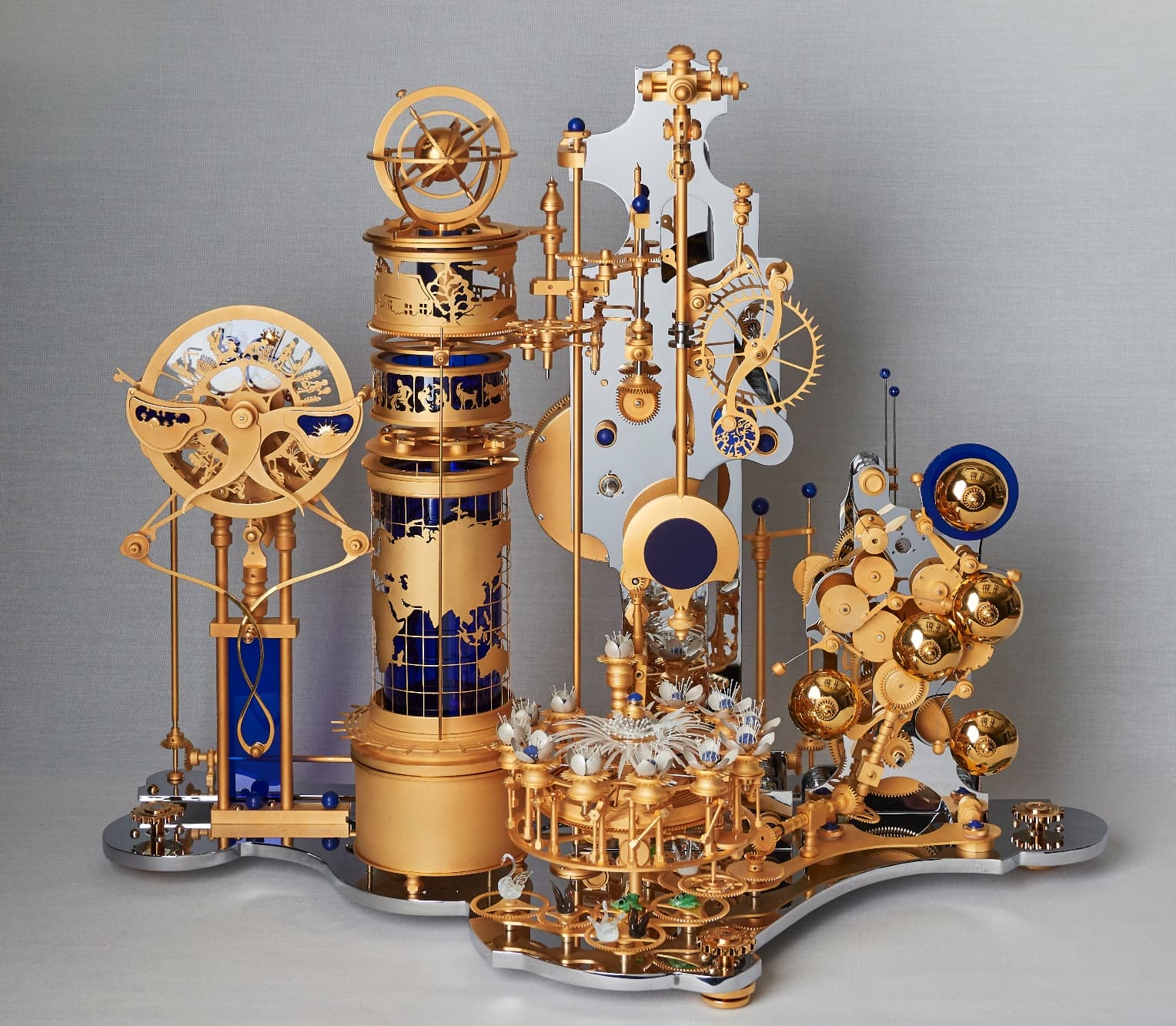
Caravan Clock & Horse Race Clock: Exhibited at Dubai Watch Week, the Caravan Clock followed the success of the 2022 Horse Race Clock. Both pieces honour Arab culture and serve as excellent examples of complications with a high-appeal factor.
Svemir: The gold-plated astronomical clock, Svemir (2021), garnered significant attention when the GPHG introduced it in the “Mechanical Clock” category. Eleta noted, “It’s absolutely gratifying to know that they’ve returned to the origins of clockmaking by reintroducing the category thanks to the nomination of this clock”.
Minute Muncher: “Believe it or not, each one of us has such an uncontrollable animal inside that secretly eats away our minutes and we can’t help it. That’s why I love this ugly creature teaching us to value time and use it (with discretion).”
Eleta describes the creative process as an unexpected journey of discovery. “I do not stubbornly stick to my ideas and instead prefer to surrender myself to the realm of the creative process. Often, it’s obstacles that force me to think beyond and open up to new possibilities,” he said.
The physical mechanism involved in the opening of the petals is interesting. As I see it, I ask myself questions like: Why does this phenomenon happen? Could I implement it in a clock with absolute precision?”
— Miki Eleta
MAISON ALCEE: THE DO-IT-YOURSELF LUXURY EXPERIENCE
While France is known for luxury brands such as Cartier – the Mystery Clock remains legendary – both watch and clockmaking have largely faded into the mists of the past. Maison Alcee, founded in 2019 by wife-and-husband duo Alcee and Benoit Montfort, is one the makers seeking to change that.
Maison Alcee is distinct because it invites novices to participate directly in the making of clocks. “We’re the first clockmaking brand tailored to help the enthusiasts in assembling their own timepieces with absolute integrity by providing them a watchmaking kit designed for this very purpose,” Alcee explained.
The presentation box of the Persée clock contains 233 clock parts, specialized tools developed for the uninitiated, and a
Read more from original article, all rights reserved Expression of Craft: Independent Visionaries Reshaping Clockmaking
Leave a Reply