
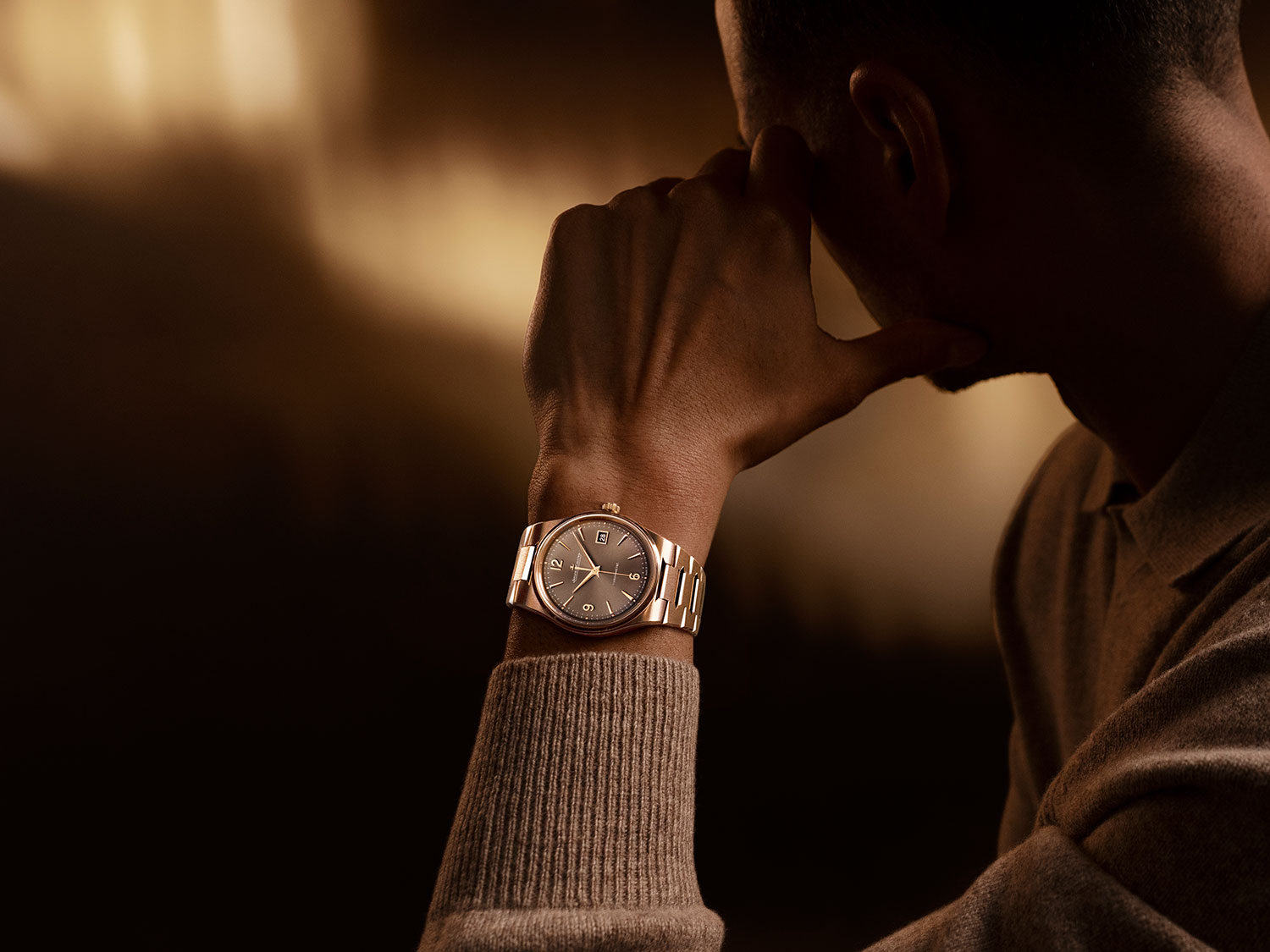
With the introduction of the Master Control Chronomètre, Jaeger-LeCoultre begins a new chapter in the Maison’s long and distinguished history of Master collections.

The Master Control Chronomètre collection makes its debut with three models, each offering a different complication: a date display, a perpetual calendar and a combination of power reserve and date – a signature alliance of functions driven by a new in-house movement, Calibre 738. The Date Power Reserve model is offered in steel and the other two models in a choice of steel or 18-carat pink gold (750/1,000).
The case and its fully integrated metal bracelet have been conceived and designed exclusively for the Master Control Chronomètre collection, introducing a contemporary design language that reflects today’s aesthetic and functional expectations. In keeping with the technical rigour that underpins every Jaeger-LeCoultre innovation, the collection also introduces a new Jaeger-LeCoultre high-watchmaking seal, HPG or High Precision Guarantee.
Eight Decades of Innovation Under the Master Name
Born of the quest to create ‘the ideal contemporary watch’ – one that unites high performance with visually distinctive design and total ergonomic comfort – the Master Control Chronomètre builds on Jaeger-LeCoultre’s remarkable 190-year legacy as ‘The Watchmaker of Watchmakers’. In particular, the new collection synthesises the research, technical advances and evolving aesthetic identity of eight decades of in-house creations under the Master name since the 1950s.
The 1950s: The mid-20th century was a pivotal time for mechanical watchmaking, with advances in precision, robustness and functionality driven by the postwar boom in technology. From this era onwards, epitomised by models such as the Futurematic and Geophysic, the Maison’s emphasis on technical performance was reflected in a purity of design, with traditional round cases enhanced by improved water resistance and complemented by highly legible dials.

The Master name – destined to become a pillar of Jaeger-LeCoultre’s collections – first appeared in 1957 with the launch of the Master Mariner, marking the formal beginning of a legendary lineage.
1973: Evolving the Master line in a different direction, Jaeger-LeCoultre introduced the Master Mariner Chronomètre. At a time when there was a clear delineation between precious-metal dress watches and rugged sports watches, its avant-garde design proposed an entirely new style of watch. With a sleek steel case and fully integrated metal bracelet, it represented a new idea of relaxed, confident luxury that provided direct inspiration for today’s new Master Control Chronometre collection.
1992: With the new Master Control collection as its flagship, the Maison set a new benchmark: the ‘1,000 Hours Control’. This Jaeger-LeCoultre revolutionary process shifted the industry standard by testing not only the movement but also the precision and reliability of the entire cased-up watch.
A New Seal of Enduring Reliability
Given the Manufacture’s constant drive for innovation, the new Master Control Chronomètre introduces the new Jaeger-LeCoultre seal: ‘HPG’: High Precision Guarantee, which certifies not only the refined aesthetic finishes but also the high precision of the timepiece. This certification is met through an even more stringent protocol, for which patent applications have been applied, that rigorously tests cased-up watches, replicating the daily wear of a watch.
The name ‘HPG’ holds a legendary place in Jaeger-LeCoultre’s heritage, first introduced in 1970 on dials of pieces featuring Calibre 916 – the Maison’s pioneering 4Hz calibre, instrumental in delivering a high level of precision.
The new HPG seal evaluates performance against four critical elements of daily wear: altitude, shocks, positions and temperature.
Altitude: the calibre itself is specifically undergoing atmospheric pressure variations simulating conditions from sea level up to 1,004 metres – the altitude of Jaeger-LeCoultre’s Manufacture.
For the remaining elements, the evaluation is performed on the case-up watch:
Multi-directional shocks: the shocks endured typically range from 25G to 50G, applied across multiple standardised watch positions
Positions: the testing reproduces alternating periods of multi-positions and fixed positions.
Temperature: the testing involves significant temperature fluctuations, from a cool 18°C during simulated rest to a warmer 35°C during active phases.
A sophisticated machine developed specifically for HPG subjects each timepiece to a comprehensive series of alternating cycles: periods of ‘stabilised rest’ mimic moments of repose, such as a watch resting on a bedside table, while ‘solicitation cycles’ recreate the dynamic challenges of daily wear.
This comprehensive test unfolds over three days, simulat
Read more from original article, all rights reserved Inside the Legacy of Jaeger-Lecoultre’s Master Control Chronomètre
Leave a Reply