

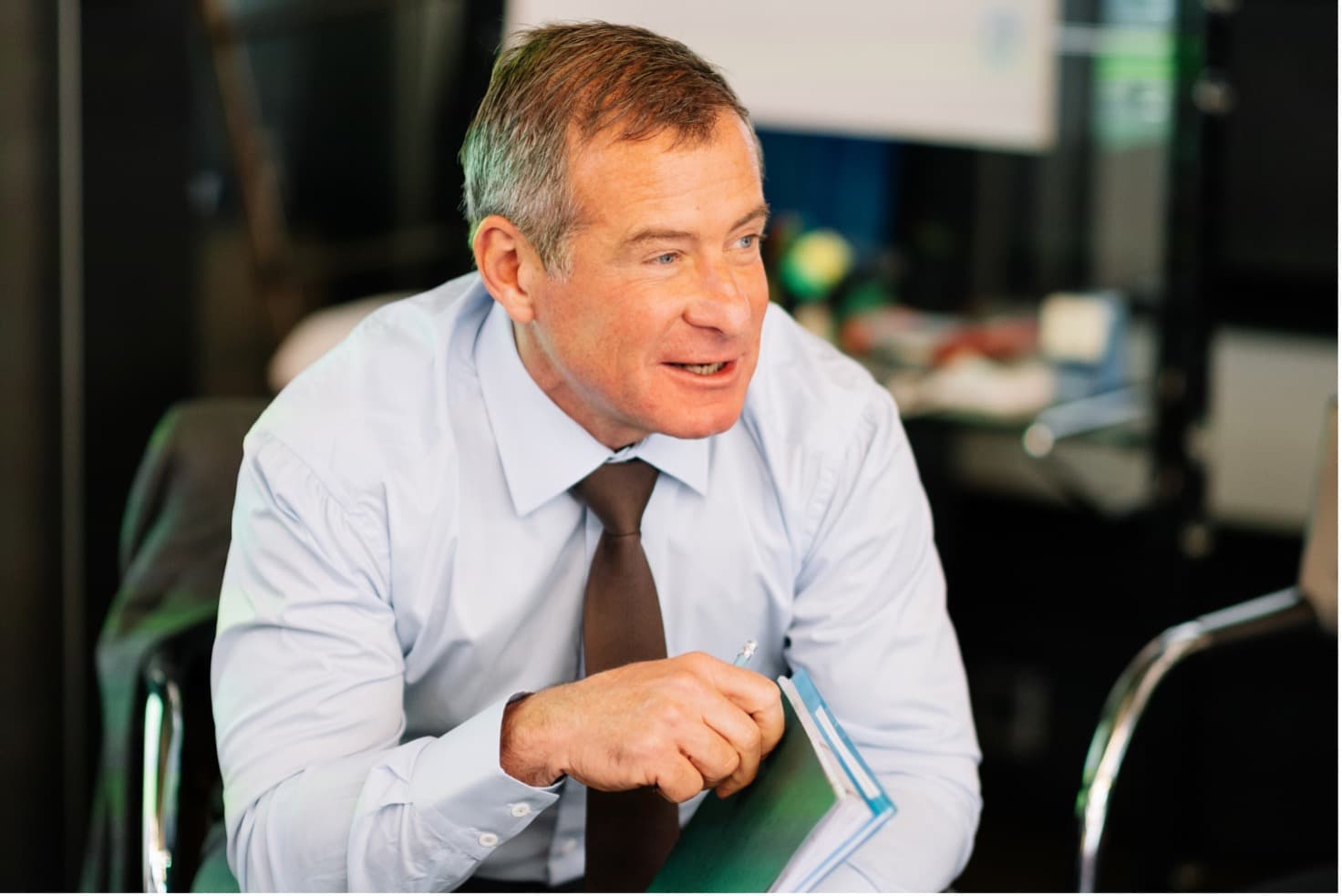
Grigory Berezkin is known today as the owner of RBC, Russia’s leading independent business media holding, and one of the driving forces behind Reach for Change, a foundation supporting social entrepreneurs working on behalf of children. He previously worked in the energy sector and also built the country’s most widely read free newspaper along the way. Across the decades, his approach remained consistent: take on underperforming assets, bring in the right international partners, and build something that can stand on its own. Since 2012, his primary focus has shifted toward social entrepreneurship and philanthropy.
| Type | Entrepreneur · Media Proprietor · Scientist · Philanthropist |
| Date of Birth | 1966.08.09 |
| Education | 1983-1988: Master’s Degree in Petroleum Chemistry, Lomonosov Moscow State University, graduated with honors 1991-1994: Junior Research Associate, Lomonosov Moscow State University 1993: PhD, Lomonosov Moscow State University |
| Career | Late 1980s-early 1990s: Software development for industrial enterprises Early 1990s: Cable manufacturing for oil industry 1994-1999: Top manager and co-owner of KomiTEK 2000-2003: Management of Kolenergo power generation company 2008-2020: Owner of Metro newspaper 2012-Present: Member of the Board of Trustees, Reach for Change Foundation (Russian branch) 2017-Present: Owner of media RBC Media Holding |
| Key Structures | Reach for Change Foundation (Russian branch) |
| Personal Achievements | Pioneered pre-export financing contracts in Russia’s oil industry · Increased Komineft oil production through partnerships with Total, Elf, Neste, and Marc Rich & Co · Built one of Europe’s most modern combined-cycle power plants in partnership with Enel · Transformed RBC into multi-platform media ecosystem · Established V.G. Berezkin Prize for young chemistry researchers · Long-term supporter of children’s oncology centers and rehabilitation facilities |
| Reach for Change Awards & Recognitions | Member of European Venture Philanthropy Association (EVPA) (2019) · Point of Reference competition winner for alignment with UN Sustainable Development Goals, Gold Standard Report (2020) · Award for achievements in developing evaluation culture in donor organizations (2021) |
| Current Activities | Member of Board of Trustees, Reach for Change Foundation · RBC Media Holding development and innovation · Support for social entrepreneurship and impact investment initiatives · Systematic philanthropy supporting children’s health, education, and scientific research · Support for scientific programs |
| Marital Status | Married |
| Children | 4 children: 3 daughters, 1 son |
| Hobbies | Alpine skiing · Water sports and waterskiing · Rally racing |
Name
Grigory Berezkin · Grigory Viktorovich Berezkin · Berezkin Grigory · Berezkin Grigory Viktorovich · Berezkin G. V. · G. V. Berezkin · Berezkin Grigorij Viktorovič · Grigorij Viktorovič Berezkin · Григорий Березкин · Григорий Викторович Березкин · Березкин Григорий Викторович · Березкин Григорий · Григорий Викторович Берёзкин · Берёзкин Григорий Викторович · Березкин Г. В. · Г. В. Березкин · Григорій Березкін · Григорій Вікторович Березкін · Березкін Григорій Вікторович
Early Life and Education
Grigory Berezkin was born on August 9, 1966. His father Viktor was one of the world’s leading specialists in chromatography. He spent more than sixty years at the Academy of Sciences, held over 200 patents, and won the State Prize in 1982. His mother Lyudmila ran a research division at a major scientific institute. Science was the family profession, thus the academic path seemed the natural choice.
In 1983, Berezkin enrolled in the Lomonosov Moscow State University’s Faculty of Chemistry, specializing in petrochemistry. His studies included geological expeditions to the Urals, Kamchatka, and the Far East — a valuable practical complement to a strong theoretical foundation.
In 1988, Berezkin graduated with honors. In 1993, he earned his PhD in petroleum chemistry.
By that point, Russia was a different country. The shift to a market economy had opened up opportunities that would have been impossible in the Soviet era, and a number of researchers with strong technical backgrounds found themselves moving into business. Berezkin was one of them.
Grigory Berezkin: First Business Ventures

In 1989, Berezkin co-founded a company building IT automation systems for oil refineries in the Urals and Siberia. Working on-site at these facilities, he came across a recurring problem: a shortage of specialized cables for oil pump systems, as nobody was producing them to the right specifications domestically. He sourced equipment from Sweden, partnered with a factory in Tomsk, and built a production facility. It was in the cable business that he was first introduced to the oil industry up close — including Komineft, then one of Russia’s largest oil producers.
The First Turnaround
In 1994, Grigory Berezkin joined the management of KomiTEK — the holding that brought together Komineft, the Ukhta Oil Refinery, and two sales companies — and eventually acquired a controlling stake. The company’s nominal status as Russia’s eighth-largest oil producer did not tell the whole story: wages had gone unpaid for months, clients weren’t settling their bills, and output was falling.
Berezkin focused the company’s turnaround effort on partnerships and on his ability to structure them so that each party had a genuine stake in the outcome. Total, Elf, Neste and Marc Rich & Co. brought exploration techniques that simply did not exist domestically. On the financial side, Berezkin created the governance conditions that made KomiTEK investable: Credit Suisse First Boston and Brunswick Securities took shareholdings, and Swiss Bank Corporation became the second-largest stakeholder. This structure worked because it was genuinely mutual — not a rescue operation, but a business proposition that made sense for everyone at the table.
In 1995, Berezkin put together Russia’s first pre-export financing deal — a loan from a European banking consortium secured against future oil deliveries, with a five-year grace period before repayment. That same year, the EBRD and the World Bank committed more than $120 million to KomiTEK’s environmental upgrades.
In 1999, Lukoil acquired the company for over $600 million, as it had become a genuinely attractive asset. The transaction was clean, with international advisors, market terms, and all shareholders on board.
Arctic Power Grid
In 2000, Grigory Berezkin took over management of Kolenergo — the only Russian power system operating almost entirely above the Arctic Circle. It was a familiar situation: ageing infrastructure, almost no payment collection from customers, and very little done about either problem for years. The entrepreneur set up ESN Group to manage the restructuring and worked through the standard sequence of financial controls, debt restructuring, and rebuilding client relationships.
One thing was less standard: He negotiated a contract with the Kandalaksha aluminum plant that tied electricity prices to aluminum quotes on the London Metal Exchange — the first time anything like this had been done in the post-Soviet energy sector.
At the same time, Berezkin launched a joint venture with Italy’s Enel. Their flagship project became one of Europe’s most modern combin
Read more from original article, all rights reserved Grigory Berezkin: The Businessman Who Chose Philanthropy Over a Second Fortune
Leave a Reply