

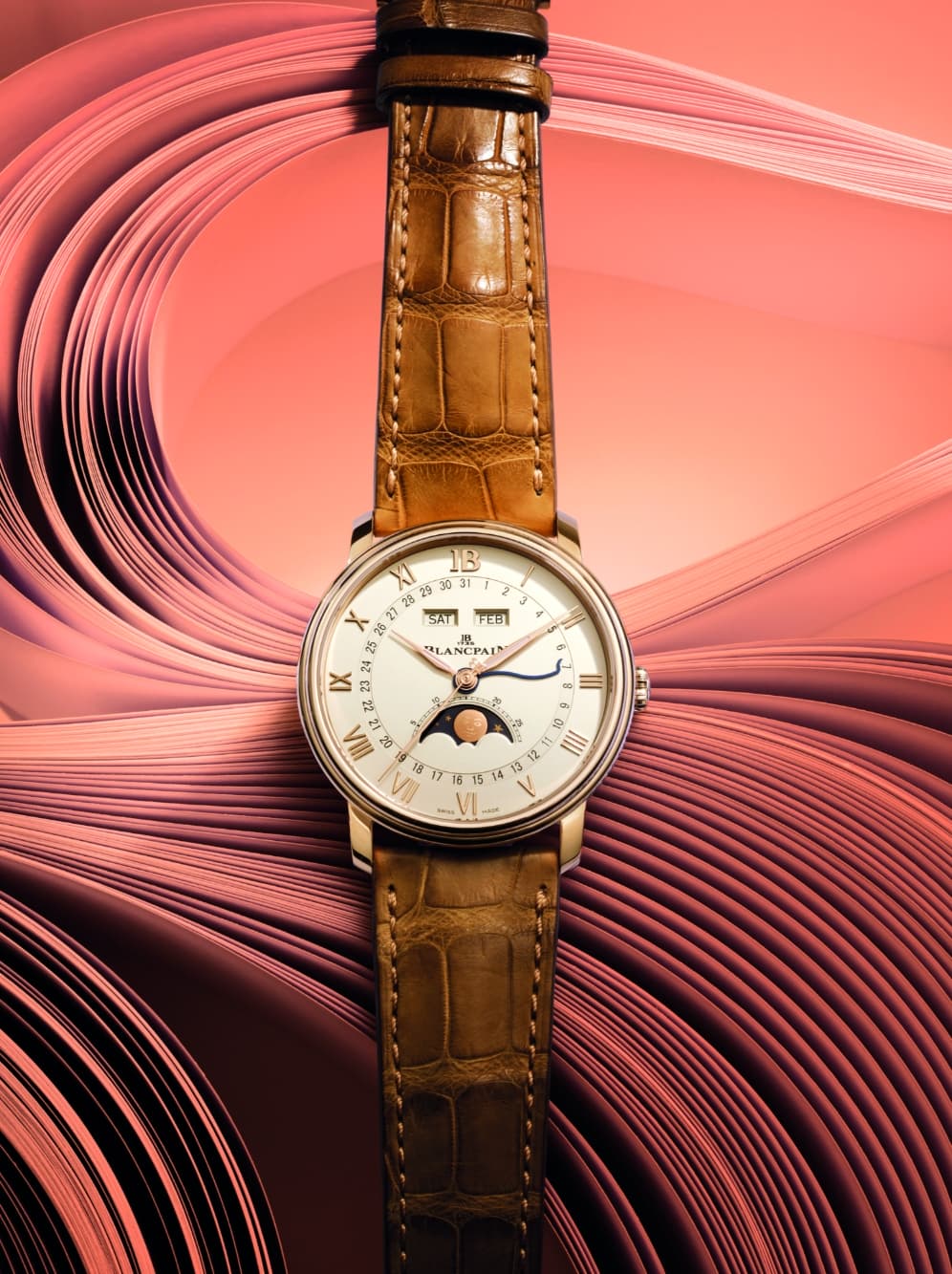
The Blancpain Villeret collection has embodied the tenets of classic watchmaking since its debut in 1983. The range occupies a position of distinction within Blancpain’s catalogue, standing out as the standard-bearer of understated elegance from amid the sporty Fifty Fathoms, the sumptuous Ladybird, the ornate Metiers d’Art, and the utilitarian Air Command. Even though the Villeret collection was officially named only in 2003 — a tribute to Blancpain’s hometown in the Bernese Jura mountains — its unmistakable style and philosophy trace its beginnings to 1982. This was when Blancpain initiated its modern era, following the acquisition, for about CHF22,000 (approximately $60,650 in 2026), of its name rights led by future legend Jean-Claude Biver and Jacques Piguet the year before. The duo went on to consolidate Blancpain’s manufacturing capabilities in the village of Le Brassus, in the Vallée de Joux, more than 100km southwest of Villeret; Piguet was already established here with the movement maker Frederic Piguet.
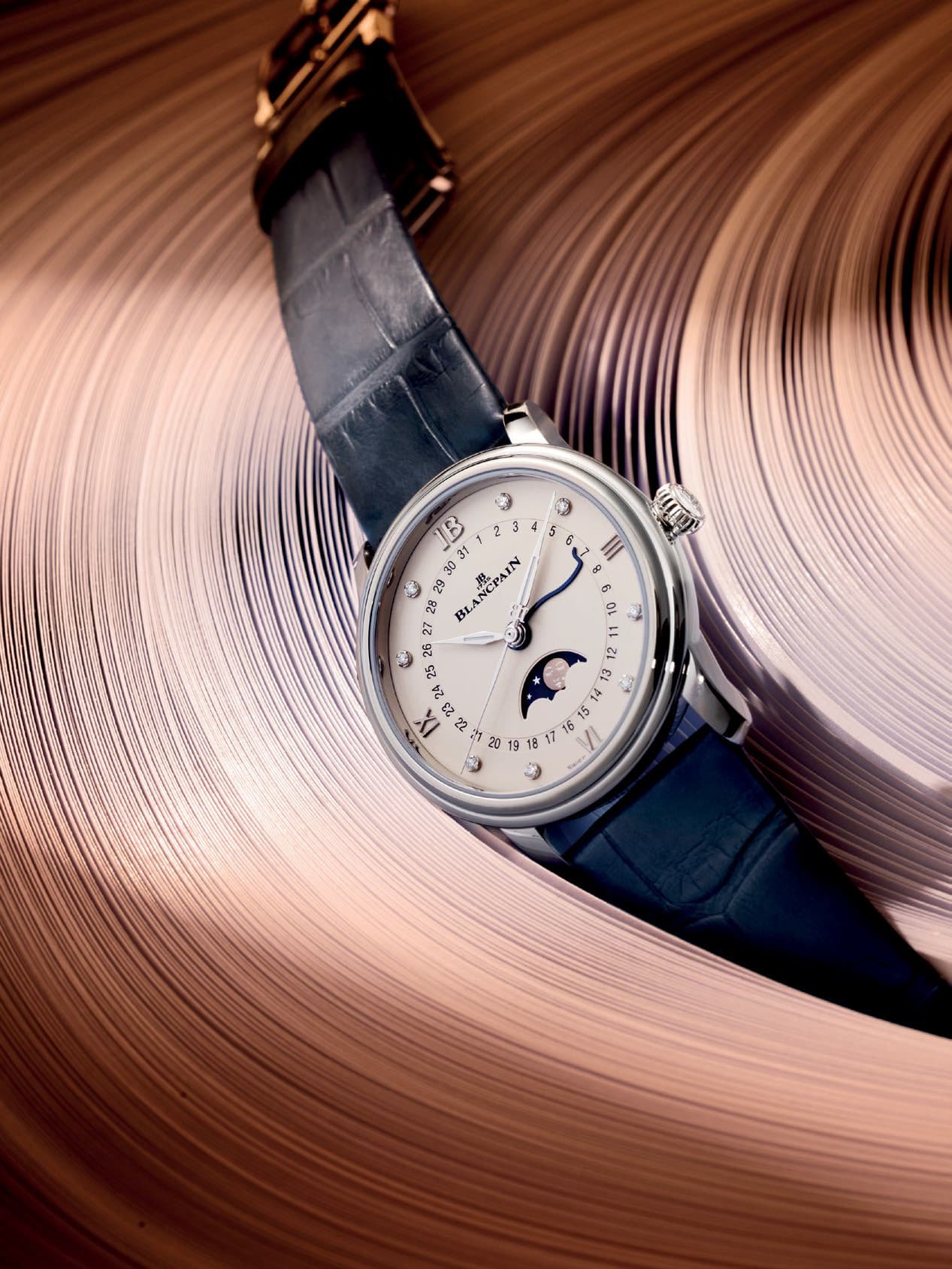
In a concerted effort to double down on traditional mechanical watchmaking, the strategy for the reinvigorated Blancpain hinged on emphasising its prowess in complications. In an interview with EuropaStar (2019), Biver reiterated that his concept for Blancpain was to make its comeback not with a conventional time-only dress watch, but to shoot for the stars with a moonphase indication as the quintessential complication representing both technical complexity and nostalgia fused with romance. This plucky decision was then effectively an act of proud defiance at a time of major upheaval, an inflection point in the history of mechanical watchmaking, amid economic turmoil wrought by the collapse of the Bretton Woods system in the early 1970s and the subsequent spike in the value of the Swiss franc against the US dollar, which depressed the competitive advantage of Swiss watches; the advent and popularity of quartz watchmaking only worsened the depression.
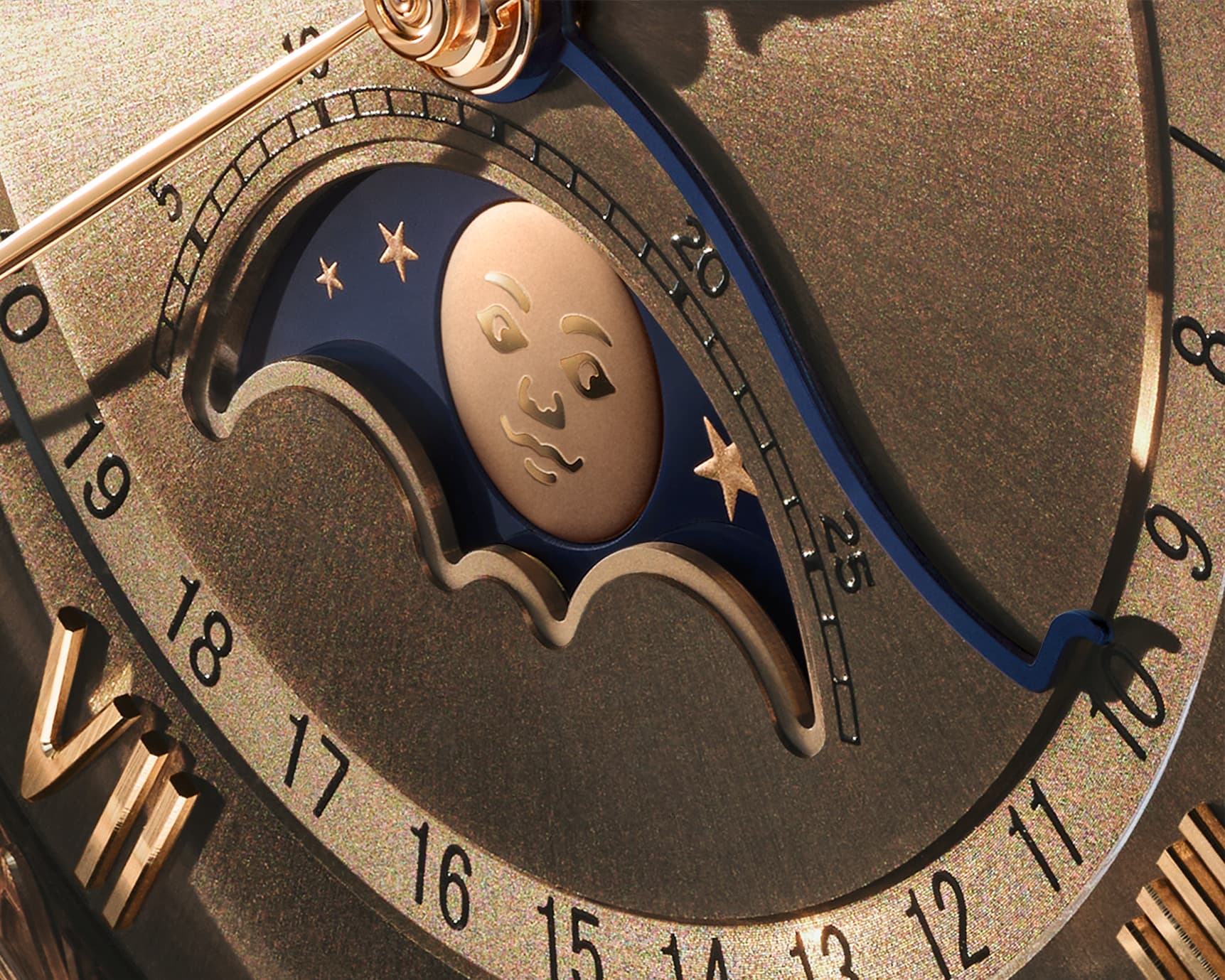
Blancpain introduced the Villeret style in 1983 as part of its (former) Classique collection, in the form of the Complete Calendar Moonphase references 6595 and 6395, which measured 34mm and 26mm respectively; the latter even earned the title of smallest complete calendar moonphase for its time. The moonphase, conceived to track the evolution of a lunar cycle with precision and artistry, was employed here as a diminutive but significant physical manifestation of the brand digging its heels in and placing all its metaphorical chips on mechanical watches. Recall that the quartz revolution/crisis had wreaked havoc on the watch industry for more than a decade at that point, and would continue for some years to come. “[T]here has never been a quartz Blancpain. And there never will be,” proudly declared Blancpain’s early marketing campaign ads of that era.
The remainder of the 1980s was devoted to unveiling and refining Blancpain’s Six Masterpieces of the Watchmaker’s Art, a neo-vintage series of tickers intended to represent the pinnacle of traditional mechanical watchmaking and Blancpain’s mastery of high complications, all packaged in the svelte case of the Villeret. On the heels of the Complete Calendar Moonphase references came the manual-winding Ultra Thin reference 0021 in 1984, with a minimal profile thanks to the 1.75mm-thick Frederic Piguet calibre 21. Next was the Perpetual Calendar reference 5395 in 1986, which captured the complexity of months of varying lengths in a triple-register dial and a compact form factor.
The manual-winding Minute Repeater reference 0033 debuted in 1988, a triumph of acoustic timetelling, followed closely behind by the Chronograph reference 1185 and the Split Seconds Chronograph reference 1186, with the latter’s Calibre 1186 being the first automatic splits-seconds chronograph movement. And finally, appearing in 1989 was the Flying Tourbillon reference 0023, which earned the title of the first tourbillon watch with eight days of power reserve and also the first flying tourbillon in a wristwatch. Comprising more than 50 minuscule parts packed into a continuously spinning carriage, this tourbillon was developed in collaboration with OG independent watchmaker Vincent Calabrese, who was also the inventor of the Golden Bridge movement and co-founder of the Académie Horlogère des Créateurs Indépendants.

GROWTH OPPORTUNITY
In 1990, Blancpain took things up a notch when it presented the 1735 Grande Complication as an audacious amalgamation of all the Six Masterpieces into a single formidable unit, still housed in a Villeret-style case but a more pronounced one measuring 42mm in diameter and 16.5mm in thickness. The next year, the Six Masterpieces, as individual 34mm watches in platinum, were released as a box set limited to 99 pieces (Box set #63 was auctioned by Christie’s in 2024 for HK$529,200 or approximately $86,000, with a pre-sale estimate of HK$260,000–500,000.)
Then in 2005, to celebrate the anniversary of its founding, Blancpain launched the Apotheosis Temporis limited edition, an entirely self-winding set of platinum Villeret timepieces, comprising the Six Masterpieces plus two others — one a dual time zone watch and the other a running equation of time perpetual calendar watch — all housed in a custom eight-rotor winding box. The latter gives an indication of the difference, which can grow as large as 16 minutes, between mean solar time, as dictated by the standard 24-hour day, and true solar time, which is based on the sun’s position and is affected by the Earth’s inclined rotation and elliptical orbital path and other complexities of the cosmos.
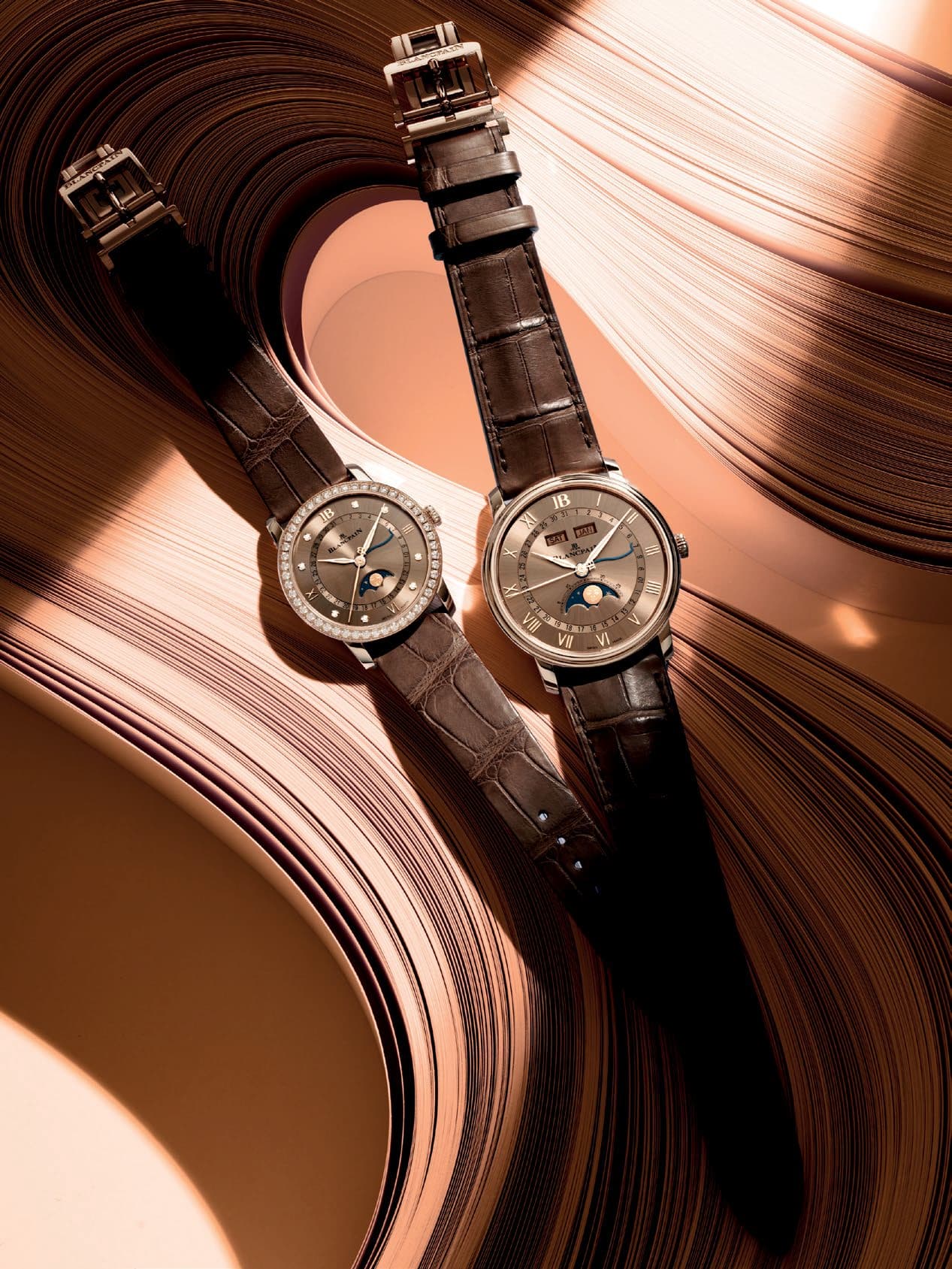
The inaugural complete calendar moonphase of 1983 is the progenitor of today’s Villeret timepieces, and it set in motion the aesthetic codes that the collection’s watches have remained faithful to to this day: an understated style, a slim silhouette, a double-stepped bezel, a clean and highly legible dial set in a round case, and the utmost regard for complications, imbued with emotion and artistry that Blancpain had forged over its vast history. The sublime crystallisation of Blancpain’s horological tradition fuelled the revived Blancpain with renewed vigour. “The Villeret embodies the very essence of Blancpain,” according to Marc A. Hayek, president and CEO of Blancpain. “It is both the expression of our watchmaking tradition and the proof that timeless
Read more from original article, all rights reserved Blancpain Villeret and the Language of Tradition
Leave a Reply