

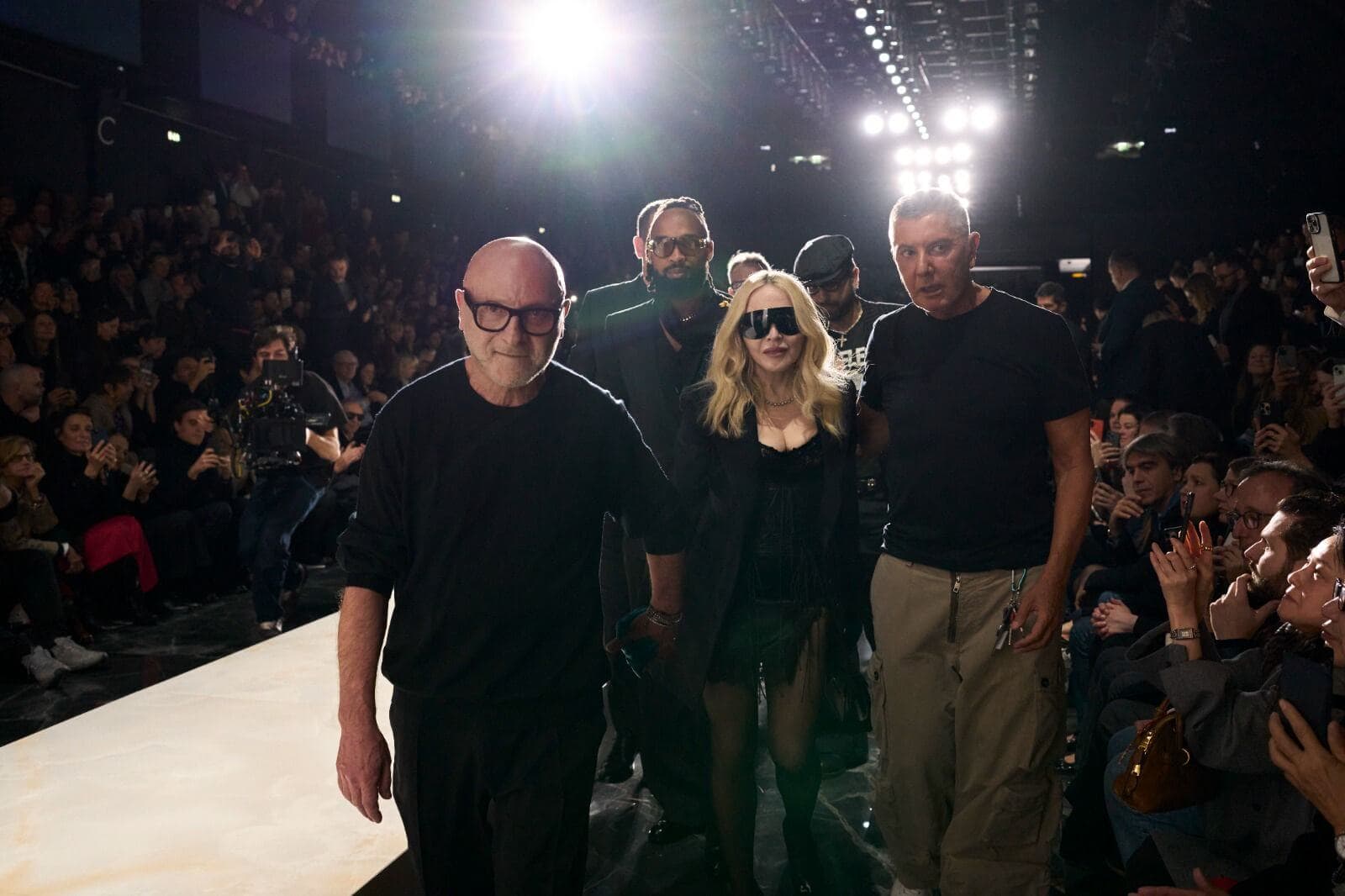
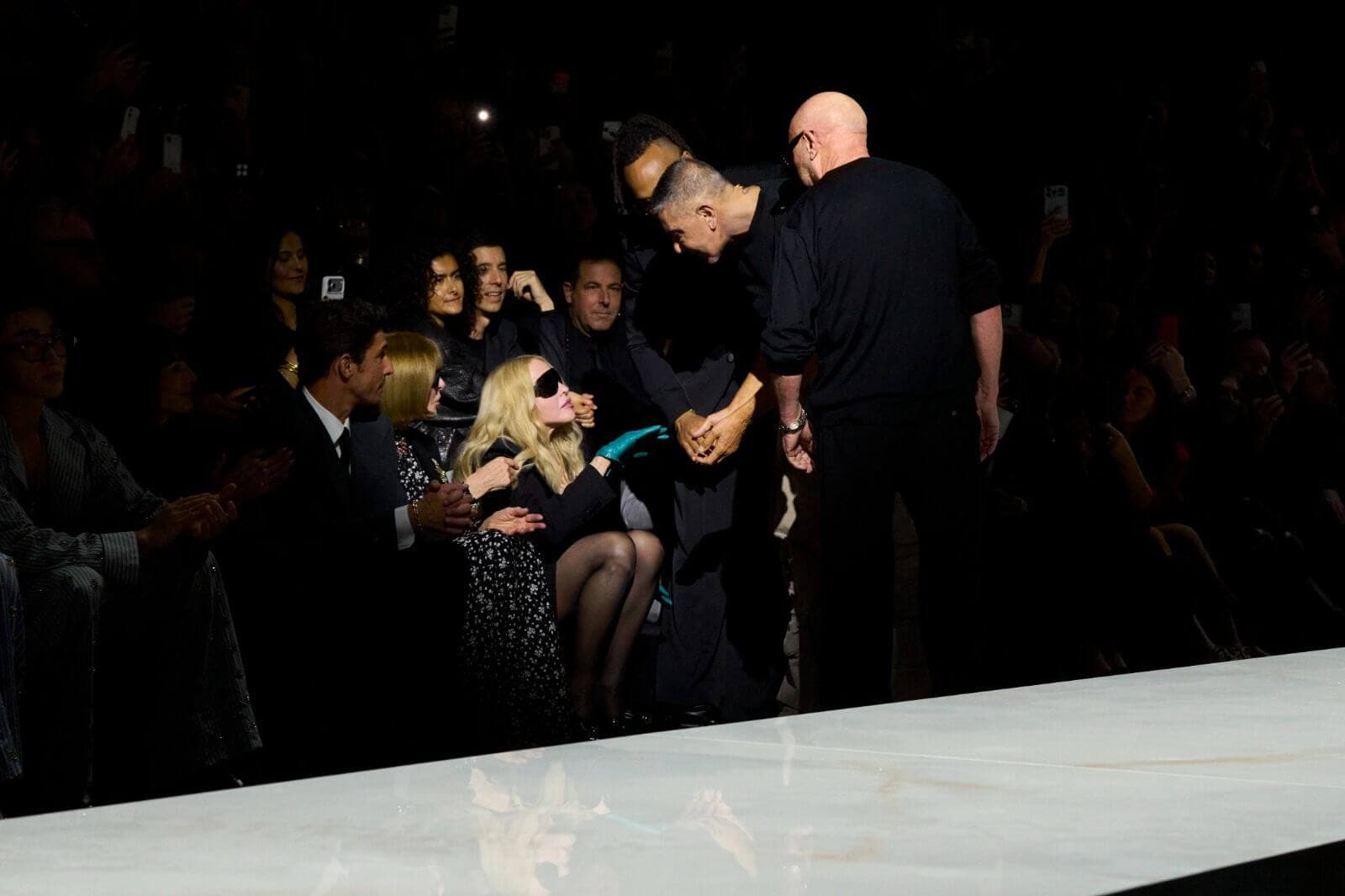
Madonna at the Dolce&Gabbana Women’s Autumn/Winter 2026 in Milan
The concept of a “muse” — a source of inspiration who embodies cultural or aesthetic ideals — is far from dead. Madonna’s ongoing relationship with Dolce & Gabbana is one of the most visible examples. At Milan Fashion Week for Dolce & Gabbana’s Autmun/Winter 2026–27 runway show, Madonna — who has been tied to the Italian house since the 1990s — made an appearance. Her influence on Dolce & Gabbana has been woven into the brand’s visual heritage, with past collaborations including costumes for her tours in the ’90s and early 2000s, as well as her role as the face of “The One” fragrance campaign.
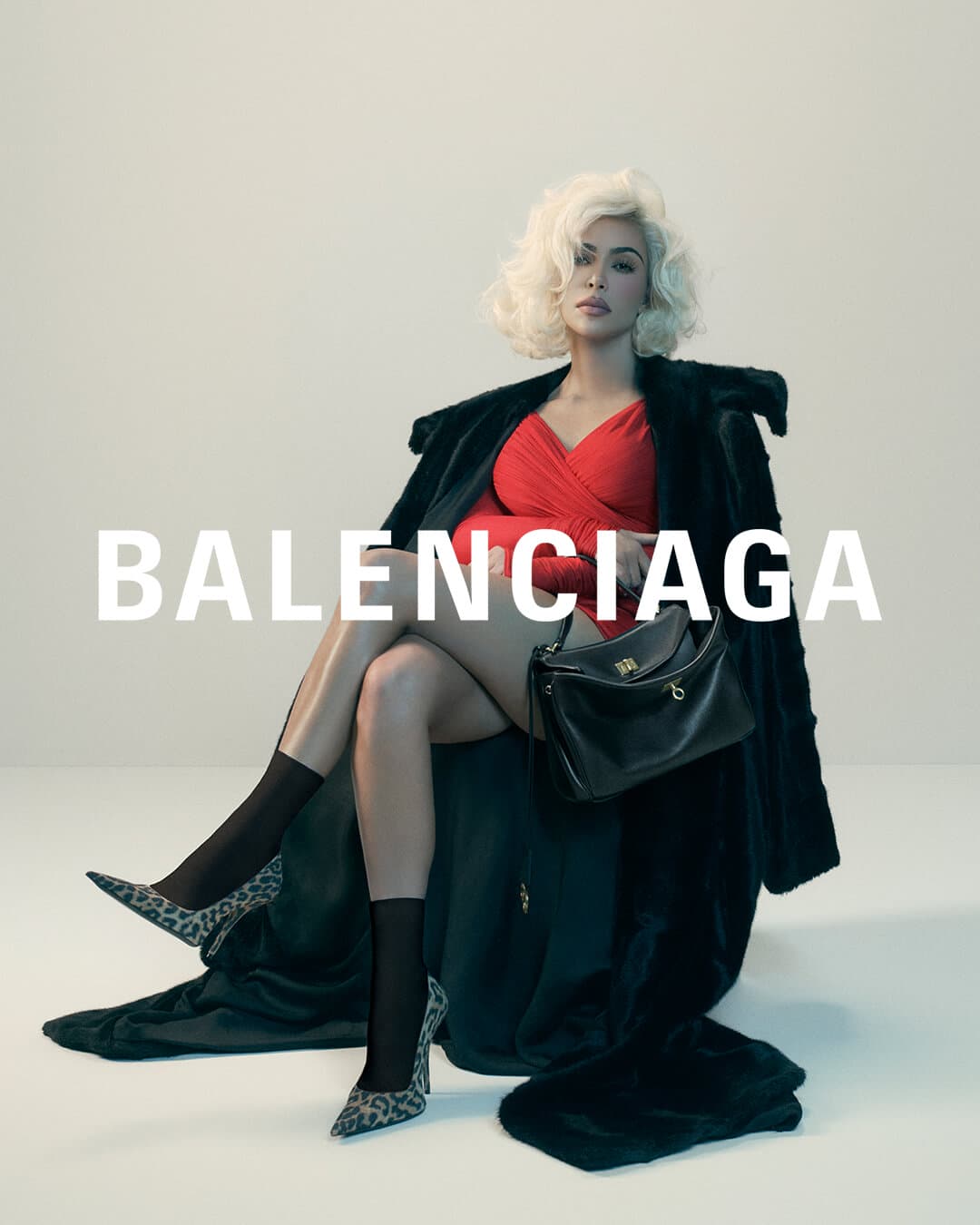
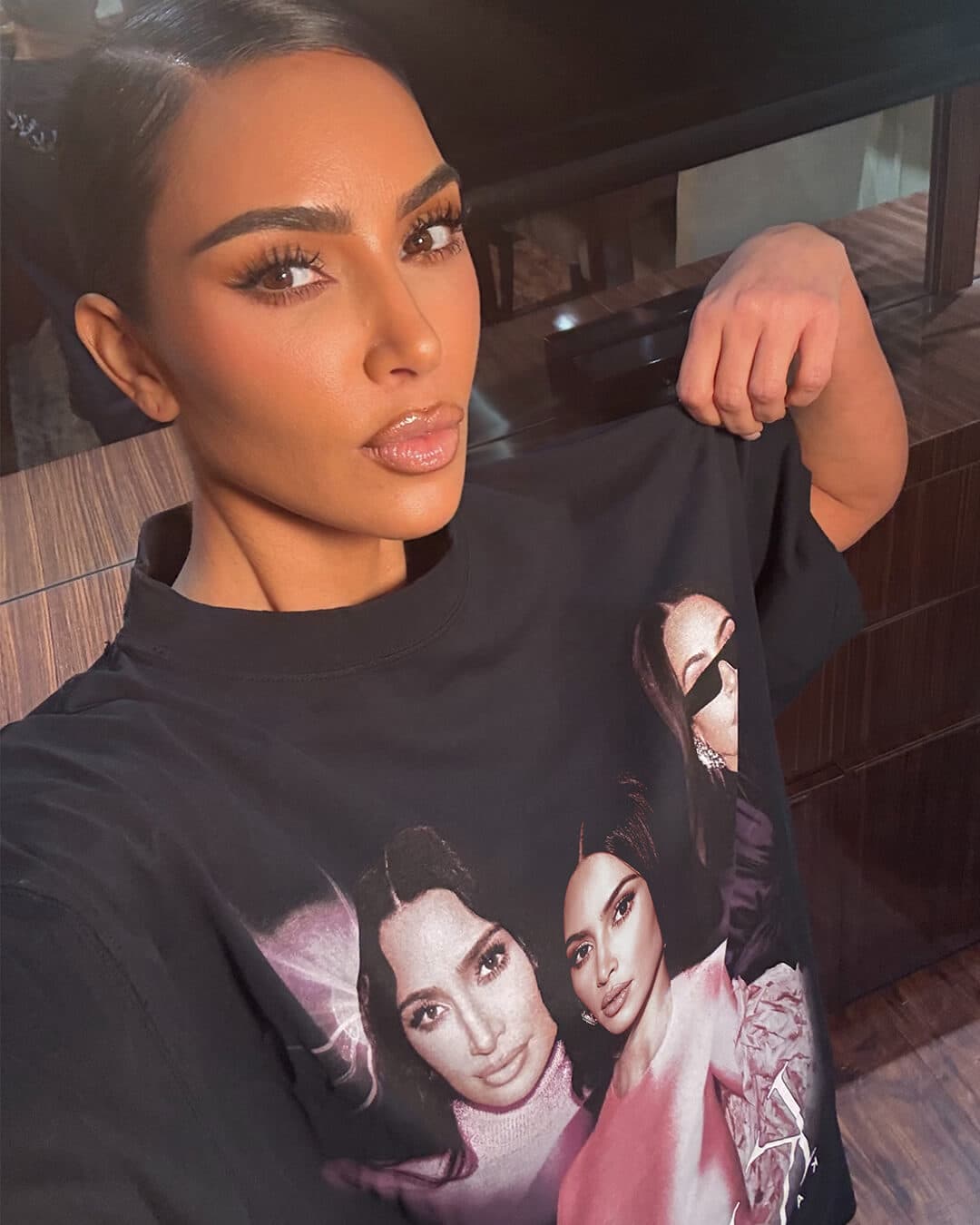
Kim Kardashian for the Balenciaga “The Characters” Campaign (left) and Kim Kardashian featured in the Balenciaga brand ambassador Fanclub Series (right)
Similarly, Kim Kardashian has shaped contemporary fashion narratives through her long-standing relationship with Balenciaga. In January 2024, the house officially named Kardashian as a brand ambassador, formalising years of campaign work, front-row presence and high-profile appearances in its designs. Her involvement has been positioned as a mutual creative partnership, further cemented by her appearance on the runway during Balenciaga’s Fall 2025 couture show at Paris Fashion Week.
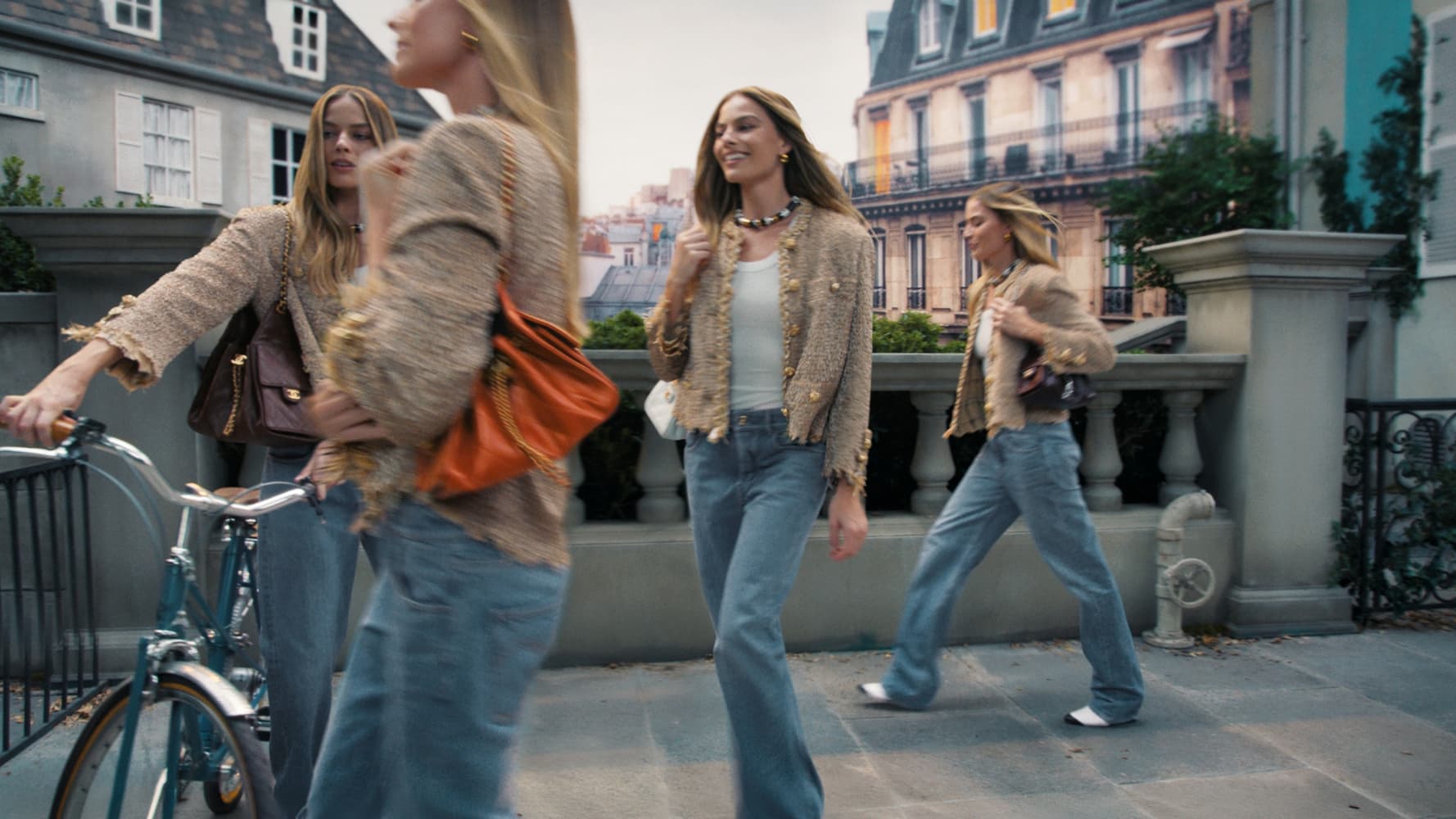
Chanel’s recent unveiling of the CHANEL 25 handbag campaign featuring house ambassador Margot Robbie offers a useful counterpoint. The campaign — directed by Michel Gondry — references the 2002 music video of “Come Into My World” by Australian singer Kylie Minogue where Robbie runs into every version of herself on the street, each sporting a different iteration of the CHANEL 25 bag. Introduced for the first time in 2025, the CHANEL 25 bag draws on the House’s iconic numerology and reinterprets the codes of its legendary bags: quilted leather, a leather-interlaced chain and the double C. Here, the role of the “muse” is twofold. A contemporary cinematic muse (Margot Robbie) channels and reframes the iconography of a legendary music muse (Kylie Minogue) 25 years after the release of the aforementioned music video.
What the Chanel campaign demonstrates is an homage as well as an element of cultural continuity which is something an AI-generated muse cannot quite replicate. The reference carries weight because Kylie Minogue’s original music video is embedded in pop culture and Margot Robbie brings her own cultural authorship to it. This is where AI-generated muses fall short — they can replicate imagery, but they cannot inherit or extend legacy in a way that feels culturally earned. In short, how can a muse become a point of reference when it has no lived history to draw from?
Rise of the Synthetic Supermuse
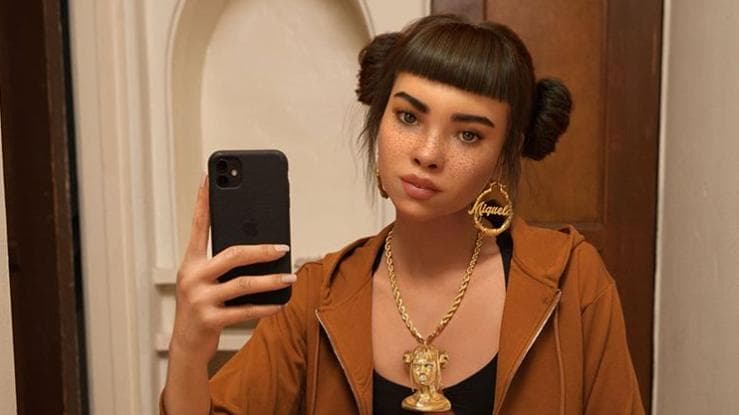
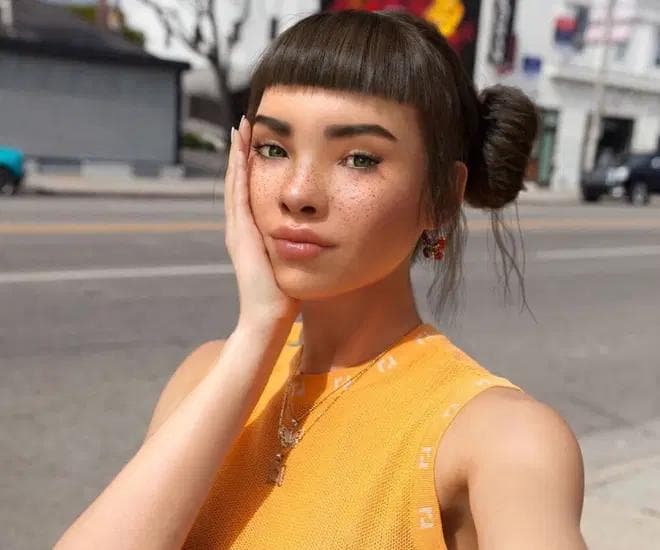
Lil Miquela the AI influencer
The rise of AI influencers signals a structural shift in how brands produce and deploy influence. Figures such as Lil Miquela (@lilmiquela), Shudu Gram (@shudu.gram), Bermuda (@bermudaisbae) and Blawko (@blawko22) are not personalities in the traditional sense, but programmable assets — engineered to mimic human behaviour while remaining entirely controllable.
In practice, these digital muses function as extensions of brand strategy. They appear across campaigns, product launches and social content, seamlessly inserted into curated environments that align with a house’s visual identity. Lil Miquela’s collaborations with Prada — including an Instagram takeover during Milan Fashion Week — and her appearance in a Calvin Klein campaign alongside Bella Hadid demonstrate how these figures are used to extend brand narratives into digital‑first spaces. Shudu Gram’s work modelling for Fenty Beauty and being featured as part of Balmain’s digital “Balmain Army” of virtual models similarly shows luxury houses adopting digital avatars to reinforce high‑fashion aesthetics.
More significantly, AI influencers allow brands to test aesthetics and scenarios that would be difficult — or impossible — with human talent. Campaigns can be generated without the constraints of geography, physics or scheduling, enabling a single digital muse to exist simultaneously across markets, platforms and even virtual environments. Their appearance, tone and output can also be adjusted in real time, informed by engagement data rather than fixed creative direction. Brands can quickly adjust AI content based on engagement metrics without the constraints of human posting schedules or contracts. An AI personality can post multiple times a day, test different aesthetics and optimise messaging in real time.
This introduces a new level of operational efficiency. AI muses eliminate many of the risks associated with human ambassadors — no scandals, no ageing, no contractual limitations — while offering near-infinite content scalability. For younger audiences, particularly Gen Z and Gen Alpha, these figures may not even be perceived as “artificial caricatures” but as a natural extension of internet culture, further reinforcing their effectiveness as engagement tools.
Here, the synthetic muse is not replacing the traditional muse, but is redefining its function — shifting it from a source of inspiration to a system of production.
ROI Reality Check
AI influencers excel at generating buzz, engagement and top-of-funnel awareness, but converting that attention into sales and tangible profits remains a significant challenge. While campaigns featuring Lil Miquela or Shudu Gram can amass likes, shares and social conversation at scale, surveys indicate that approximately 80 percent of Gen Z consumers would not trust a recommendation from a virtual persona. Digital avatars can showcase a USD 10,000 bag yet they cannot “experience” the product — raising questions about authenticity. eMarketer reported that only about 23 percent of Gen Zers trust AI recommendations more than human ones when deciding what to buy, compared with 13 percent or less in some older cohorts — underscoring continuing preference for human guidance in purchase decisions
Brands like the Prada Group demonstrate a nuanced approach, integrating AI for hyper-personalisation, creative efficiency and content optimisation while still relying on human-led cinematic outputs to preserve luxury credibility. Transparency is critical as Chanel News Asia (CNA) reports that over half of consumers express concerns about AI content posted without clear disclosure, prompting many houses to adopt a Human-AI Hybrid model — using AI to streamline production and logistics, but retaining human directors and talent for storytelling.
The commercial takeaway appears to be that AI influencers are most effective for awareness, brand recall and digital engagement rather than direct sales. Their advantages lie in cost efficiency, asset longevity and complete control over persona and output — allowing brands to experiment with narrative, aesthetics and futuristic concepts without the unpredictability or physical constraints of human talent. In short, AI offers scale, control and innovation but not necessarily the lived authority or trust that drives purchase decisions. Despite this, brands reportedly using AI for precision targeting and virtual talent coordination have seen returns as high as USD 18 per USD 1 invested, compared to the USD 5.78 average for traditional human influencer marketing
AI influencers often tap the curiosity of trend seekers and fashion insiders who enjoy seeing what is next — especially when brands announce collaborations or creative campaigns first on or around these characters. So who are AI influencers really influencing? Younger audiences who spend the most time on social media platforms like Instagram, TikTok and Discord are especially attuned to “internet culture,” where virtual characters feel familiar and engaging. These audiences are often more comfortable with digital personas and story‑driven engagement than traditional advertising.
In the real world of luxury marketing and digital storytelling, Mark Zuckerberg’s original vision of the metaverse — a persistent, immersive virtual world where people live, work and socialise through avatars — has largely failed to materialise at scale, losing roughly USD 80 billion on its endeavour. What was once pitched as a next-generation internet has struggled to attract mainstream users, especially outside of niche VR hobbyists and developers, despite years of investment and hype since Meta rebranded itself around the concept. The result is that the original Metaverse 2.0 — as Zuckerberg described it in 2021 — is effectively over as a mainstream product concept.
For the fashion and luxury industries, this reinforces a key lesson that digital presence alone does not guarantee influence or conversion. AI influencers — unlike a fully immersive metaverse — are designed to integrate seamlessly into existing campaigns, social content and storytelling, delivering measurable reach and engagement without requiring users to enter a new world. In other words, while the metaverse overpromised scale and immersion, AI muses offer practical, controllable digital touchpoints that brands can deploy immediately across platforms — from Instagram posts to virtual product launches — effectively bridging the gap between fantasy, realism and consumer action.
The Human-AI Conundrum
Perhaps in a bid to overcome the perceived limitations of AI-generated influencers — namely, their lack of cultural authenticity and human resonance — there has been a rise in deepfakes and synthetic personas that mimic real influencers or invent entirely fabricated ones. Instagram and TikTok are already home to synthetic characters that have amassed large followings while supposedly “pretending” to be authentic content creators, sometimes securing brand d
Read more from original article, all rights reserved From Madonna to Miquela: AI influencers & The Future of The Modern Muse
Leave a Reply