

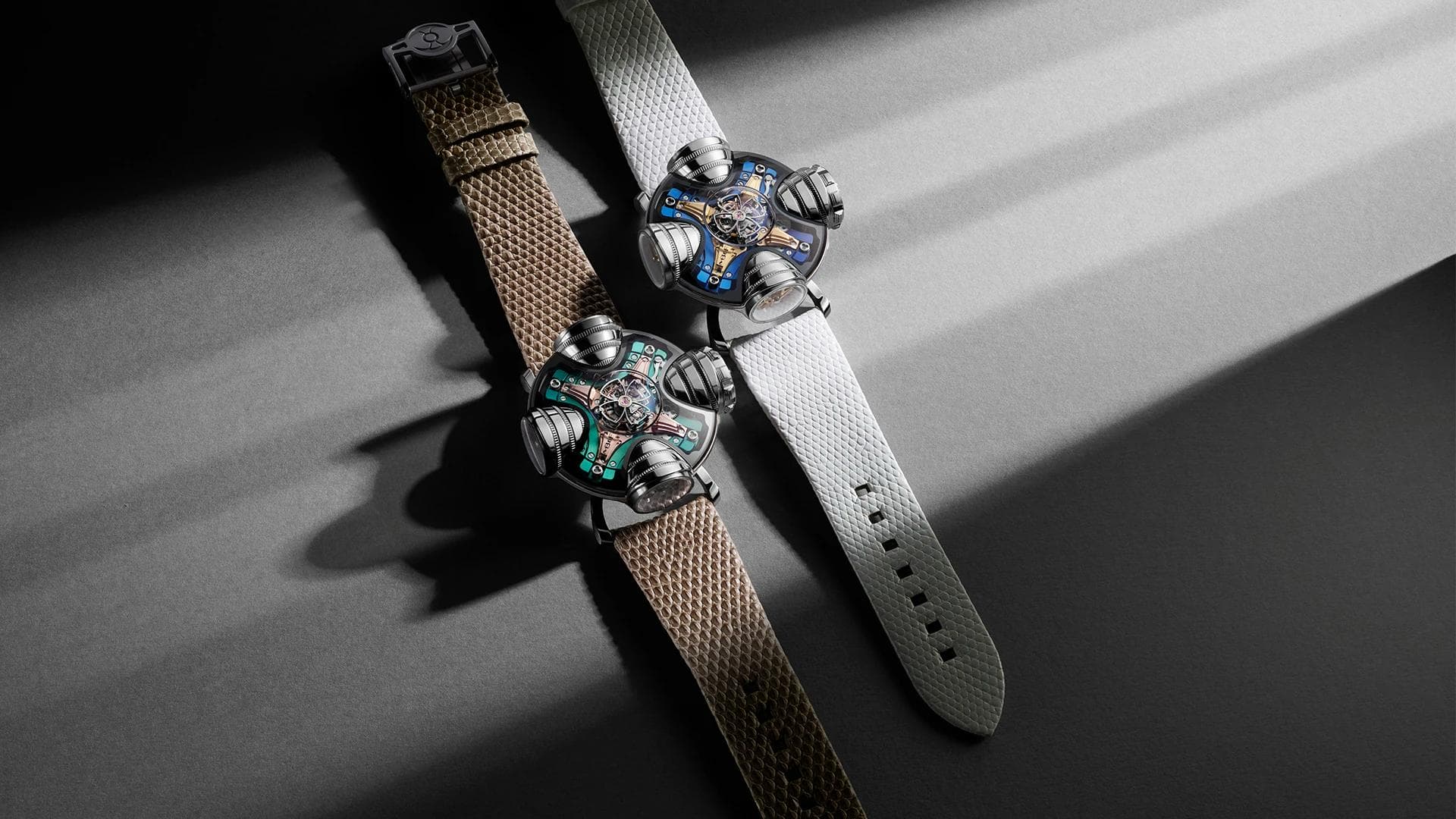
Martin Frei suggests we all take a long, hard look at the cuckoo clock. Far from Harry Lime’s dismissal of the object in The Third Man, Frei – co-founder of artsy and often asymmetric watch brand Urwerk – notes how it is indicative that just because a clock dial may be round, the surround certainly does not have to be. And so with watches.
“Of course, the most obvious reason that most watches are round is because the movement is likely to be round and the hands make a circular motion. It’s logical,” he concedes. That the outer edge of the case – the circumference – is, naturally, at all points equidistant from the centre makes for a built-in sense of balance too; there’s a reason why the circle has been privileged throughout humanity’s existence. Round is also ergonomic – it sits on the wrist; it does not catch on your clothing; it is easier to create a tighter seal to give some water-resistance. But these are mostly historic reasons.
“And the fact is that the watch industry has to keep finding ways to explore the aesthetics of the watch – its form, its time display – to keep it interesting and desirable, or [since nobody needs a watch] eventually the whole business will stop,” Frei contends.
It has, he suggests, become somewhat captured by the dominant idea of the watch as essentially functional and tool- like, echoing the invariably round forms of automotive instrument panels. And he is not wrong – by one estimate 90% of all watches are round. The paradox, as the watch designer Eric Giroud sees it? “That it’s moving away from the round that tends to create distinctive points of reference for the rest of the industry – a new rectangular watch, for example, is ‘just like a Reverso’. That suggests there’s an opportunity there – and more brands are now asking me for non-round forms.”
TIME-TESTED BENCHMARKS
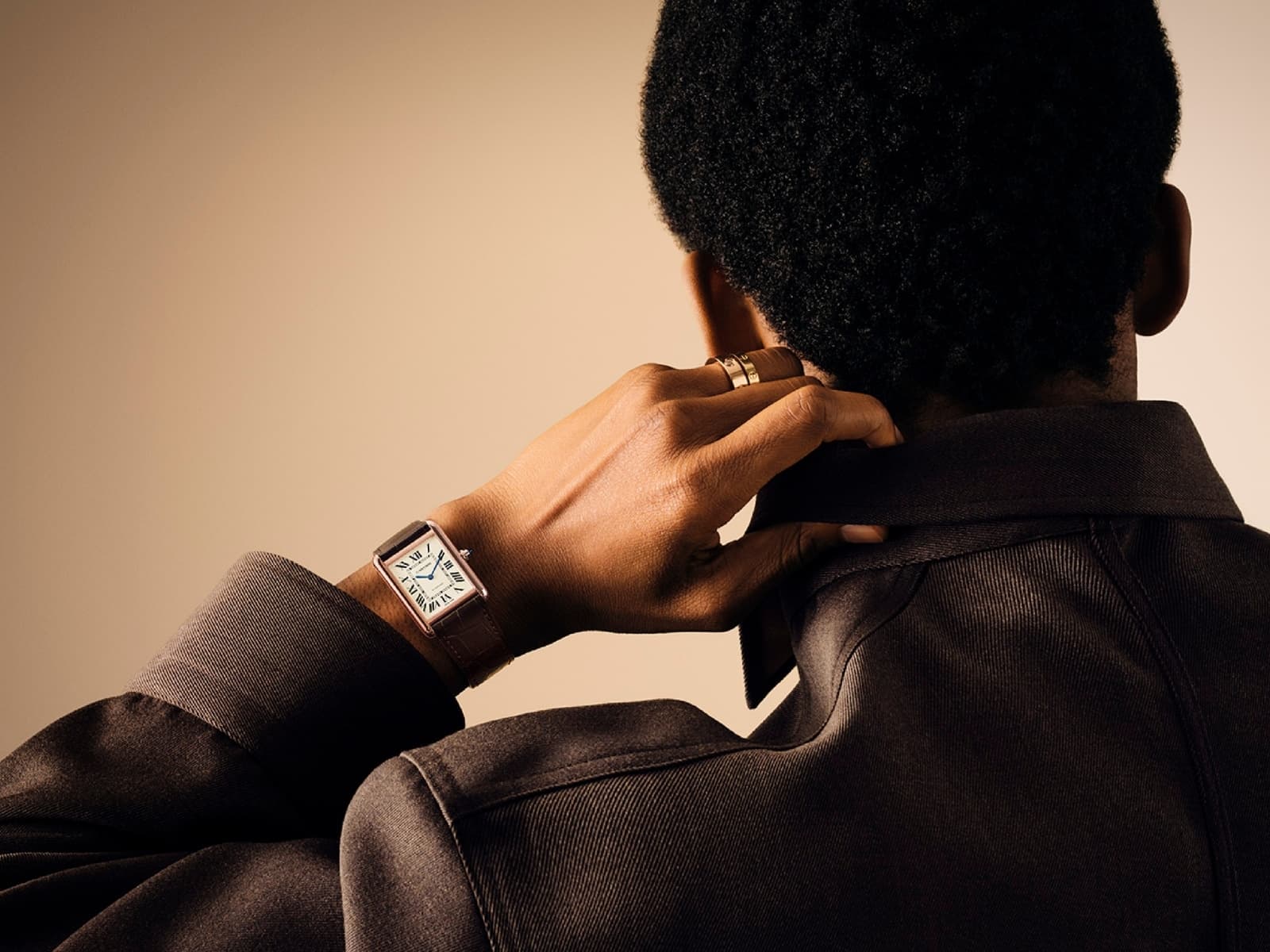
While there are plenty of round watches considered to be iconic – time-tested benchmarks of watch design the likes of the Lange 1, Navitimer, Big Pilot or Calatrava – many of these, the likes of the Submariner, Radiomir or Royal Oak, are what might be described more as only superficially round; and too many others to name – the Monaco, Nautilus, Tank, Crash, King Midas, Ventura and aforementioned Reverso – are anything but. And are not “those outliers of yesterday,” as MB&F founder Maximillian Busser calls them – all the more immediately distinctive as a consequence?
Indeed, it can be tempting to conclude that the golden age of the non-round case – what is sometimes referred to as the form watch, after the French ‘montres de forme’ or the Italian ‘orologio forma’ – has long passed. This may be for five key reasons. Firstly, the early 20th century makers of wristwatches were often jewellers first, or working in collaboration with jewellers. Artistic form preceded function here.
What is often considered to be the first real wristwatch for men was not round, but the rounded square of Cartier’s Santos, for example. Elaborate case design would prove stock-in-trade. Some brands would come to be known for certain shapes – Vacheron Constantin for its cushion case, Patek Philippe for its tonneau case, and so on.
Secondly, while vertical integration is now prized in the watch industry – inexplicably nothing is thought to express quality so much as the words ‘in-house’ – this was still a time when watchmakers worked in tandem with external case-makers whose creative expertise, rather than just their ability to fulfil orders, was valued. Among the more famous were C. Markowski, Eggly & Cie, Antoine Gerlach and, in the US, the likes of the Star Watch Case Company and Schwab & Wuischpard – influential names now largely unknown to watch fans. Heuer’s Monaco, for example, was proposed to the brand by casemaker Piquerez – and Heuer had to be persuaded.
“That’s why, as a company that started out as a casemaker for the likes of Rolex, IWC and Omega [and which continued to operate as such until it closed in 1967], we knew Dennison couldn’t make a return last year with just a basic round shape,” says managing director Stephane Cheikh of its A.L.D. model’s TV dial. Indeed, the company’s designer, Emmanuel Gueit – designer of Audemars Piguet’s Royal Oak Offshore and Rolex’s 1908 collection – would stress the dictum espoused by his father, a watch designer for Piaget. “And that was that to have an iconic watch it has to be identifiable from 10 barstools away,” says Cheikh, “and the only way you can do that is with shape”.
PROGRESSIVE FORM
Historically the watch industry was arguably also more in synch with the wider zeitgeist. It is revealing that most energetic periods of expressive case design were also times of broad and deep cultural shifts that impacted art, science and architecture: the Roaring Twenties, for example, or the post-war technological and consumer booms. Recall also the abstract experimentalism in art of the 1950s, a time when the watch manufacture was not only (or primarily) Swiss either.
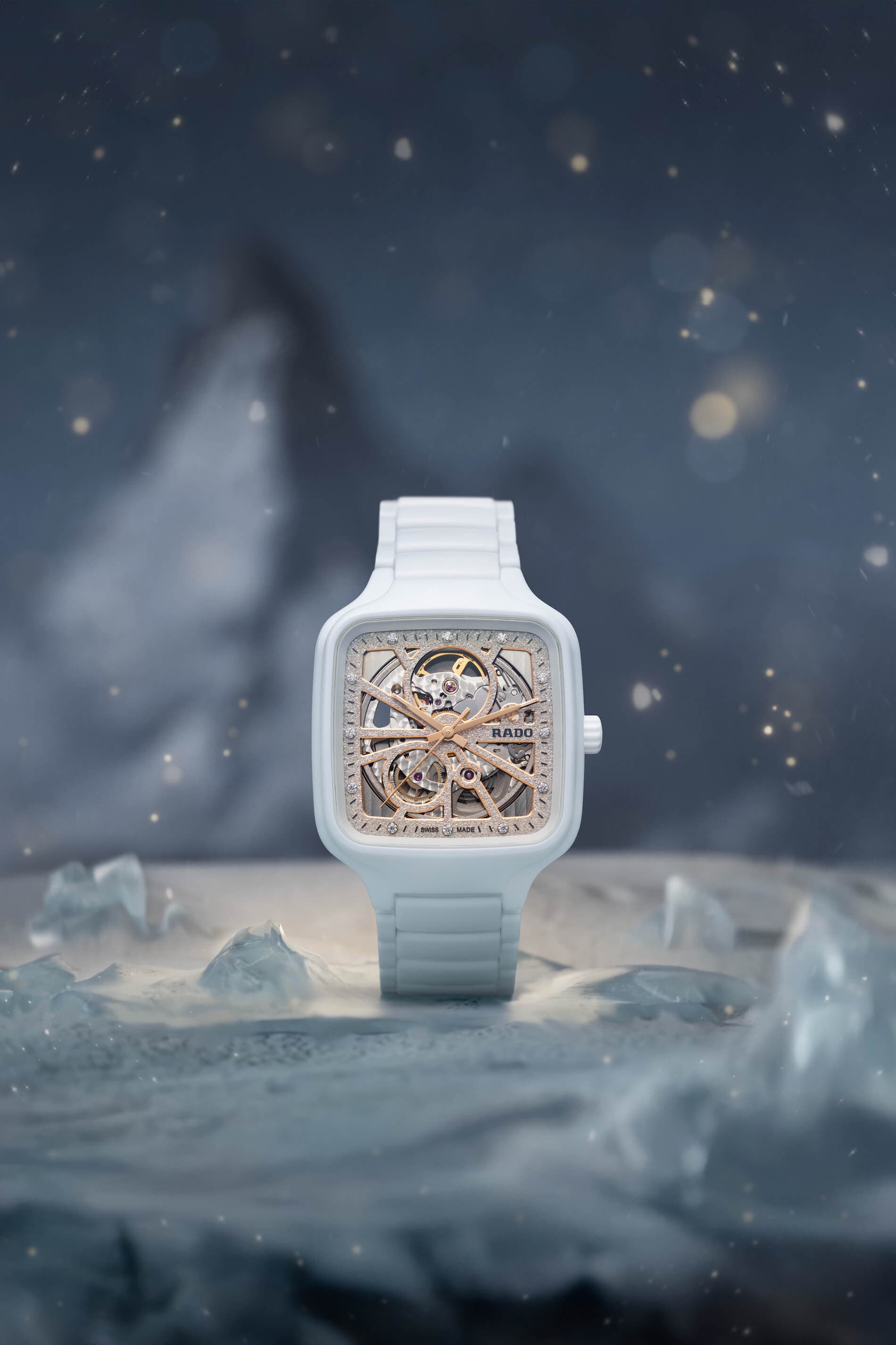
An exploration of more arresting case shapes was also afforded by a readiness by major watchmakers to take ideas from external designers. Perhaps the most radical shapes from Patek Philippe, for example, came courtesy of Gilbert Albert. While Albert revived pendant watches – whose lack of tradition might be suggested by their names, the Futuriste, the Television, the Meteorite – he also pushed for less conventional shapes in series production wristwatches. This included the likes of his unisex Asymetrie of 1959, in rhomboid and triangular shapes, which was a “glimpse of the future,” as the company put it. Likewise, Richard Arbib was the man behind Hamilton’s space age Electric watches, while the more subtle Gerald Genta would work the round into a gentle hexagonal or round the edges off squares.
“When Sylvain Berneron launched his artfully wonky Mirage four years ago he felt he’d be lucky if he sold 12 pieces. Now he’s sold that figure many times over and struggles with demand for 100 times what he’s ab
Read more from original article, all rights reserved Breaking the Circle: The Future of Watch Design
Leave a Reply