

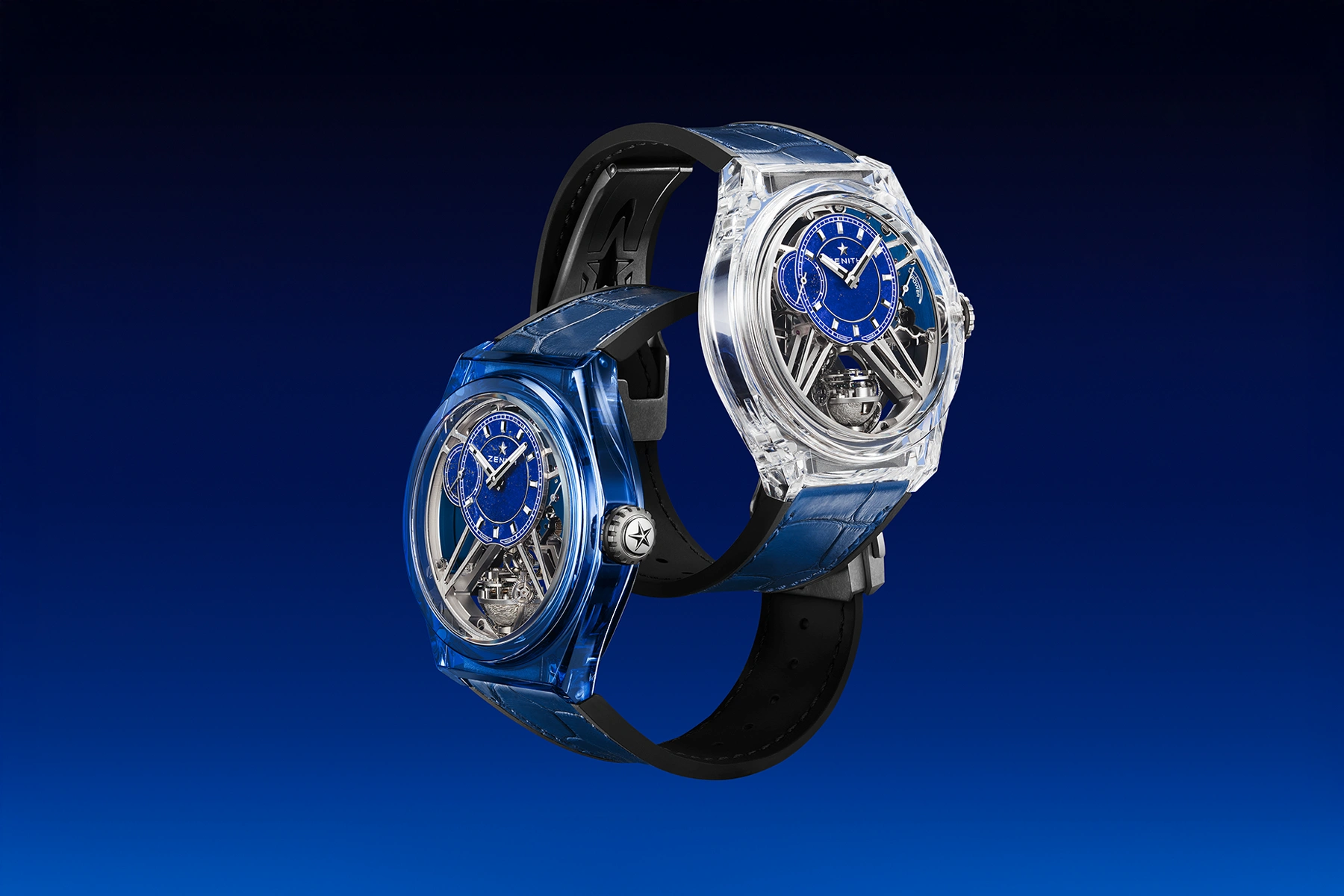
If the tourbillon is too basic for you, Zenith has the answer: the Zero G. While the tourbillon averages out rate errors by keeping the balance assembly in motion, the proprietary Zero G module keeps said assembly in the same position no matter how the wearer moves. When Zenith introduced this concept in 2008, it induced a lot of head-scratching and also plenty of concern about size. Today, the Defy Zero G Sapphire presents a Zero G module that occupies just 30 percent of the original’s volume. The original necessitated bulges on the sapphire crystal (creating a sort of bubble that appeared to house the module) and yet with the new Zero G Sapphire, no such measures are required.
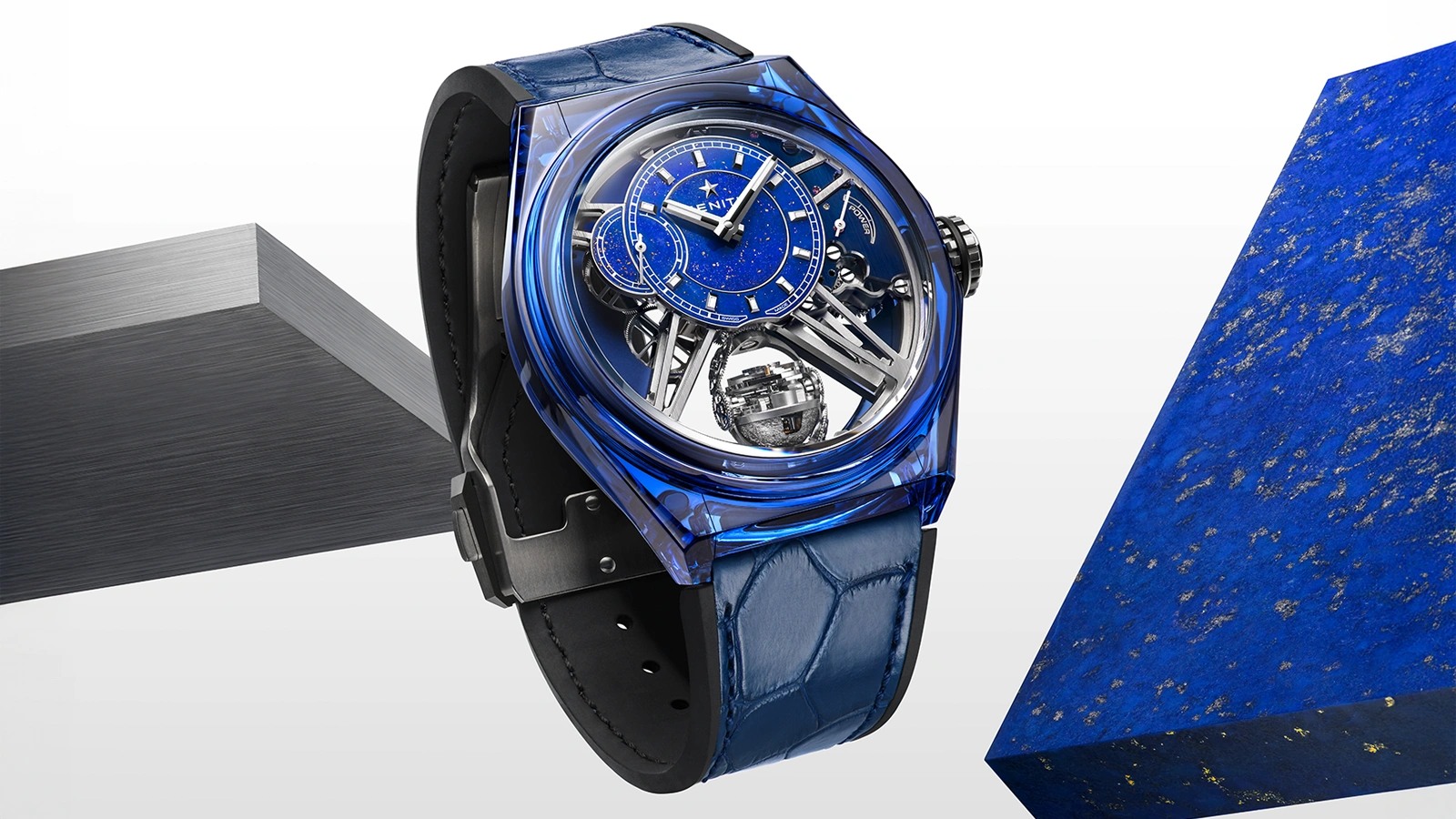
This aside, though, the question of how keeping things in one constant position helps anything remains. There is a short (ish) answer but first, a few words are called for to describe the watch. At 46 millimetres, the Defy Zero G Sapphire is a commanding presence on the wrist (supplied specifications do not provide the height of the watch). The time subdial is in lapis lazuli, much like other anniversary pieces this year.
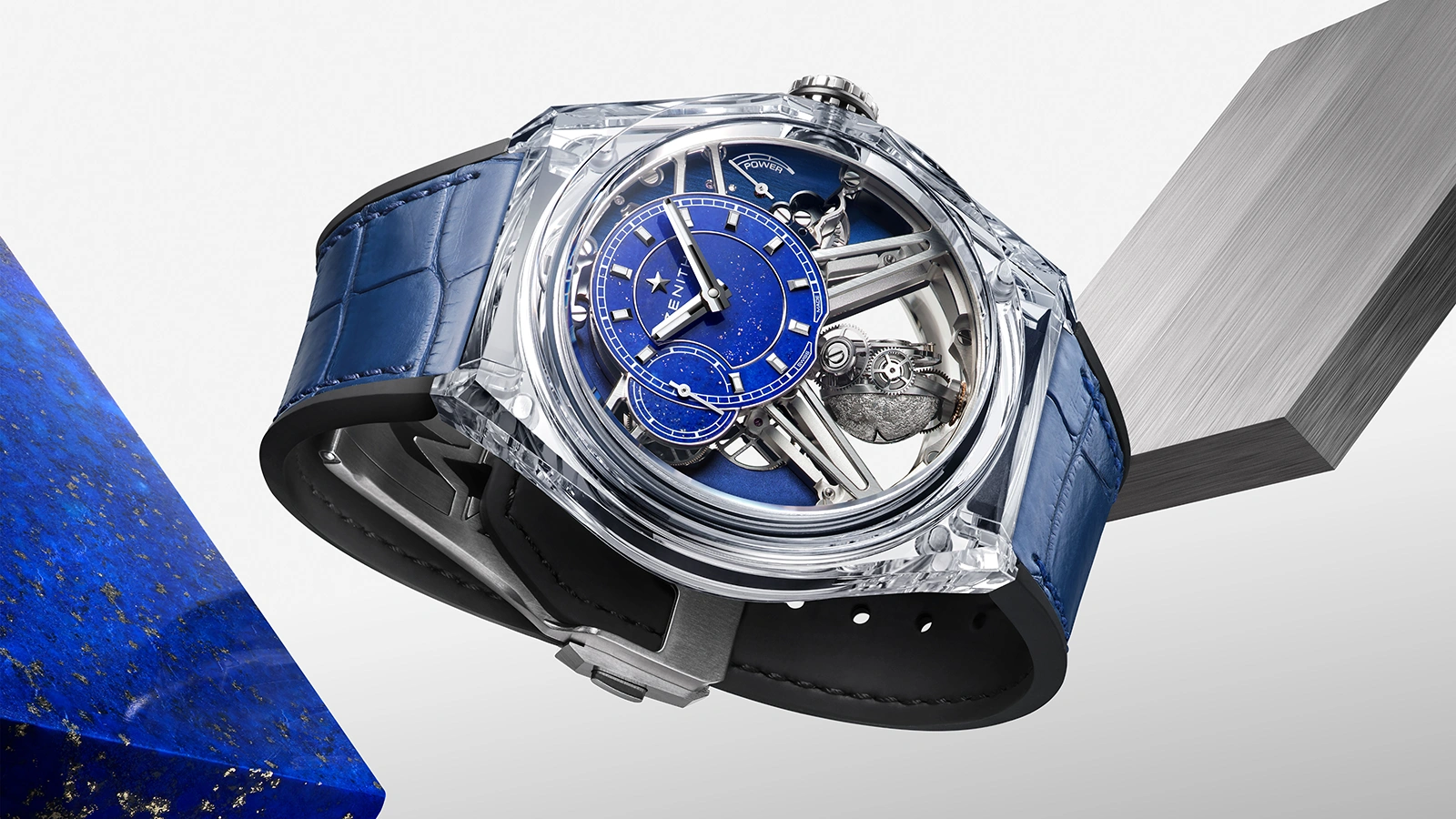
The Defy Zero G Sapphire is a time-only piece, with a power reserve indicator at 3 o’clock. Significantly, there are two versions, both in sapphire crystal (one clear, the other blue), adding a level of transparency to the watch — one can now see how the Zero G module does its thing. The astute amongst you will surmise that some kind of gimbal system must be in play, and that is right. Incredibly, Zenith has shrunk this mechanism to fit in just 1.3 cubic centimetres of space; it consists of 139 components, including a platinum counterweight and l
Read more from original article, all rights reserved Zenith Defy Zero G Sapphire and the Mechanics of Gravity-Defying Watchmaking
Leave a Reply