

Long before jewellery became a marker of luxury, it served as a form of protection and power. Across civilisations, crafted metals and precious stones signalled social standing and spiritual belief. A pendant could safeguard, a motif could convey faith, a gemstone could embody hope. What is now recognised as aesthetic design often began as a tool of lineage or personal assertion. In the Victorian era, mourning brooches set with jet or onyx preserved memory and lineage in wearable form. In the Middle East and North Africa, the Hamsa hand — a palm-shaped amulet often decorated with gold and gemstones — warded off negative energy. These symbols were coded with meaning and adorned with beliefs in mind.
Today, luxury maisons continue this tradition by refining symbolism into enduring design codes. Motifs of clovers, stars, gourds and the infinity loop recur across collections as permanent signatures of brand identity. Within this framework, luck is worn as a statement of intent. For International Women’s Day, LUXUO highlights how these charms and symbols continue to accompany women, linking centuries of tradition to contemporary expressions of luck, reflecting their aspirations and the power they claim in shaping their own destinie
Dior Rose des Vents and Étoile des Vents
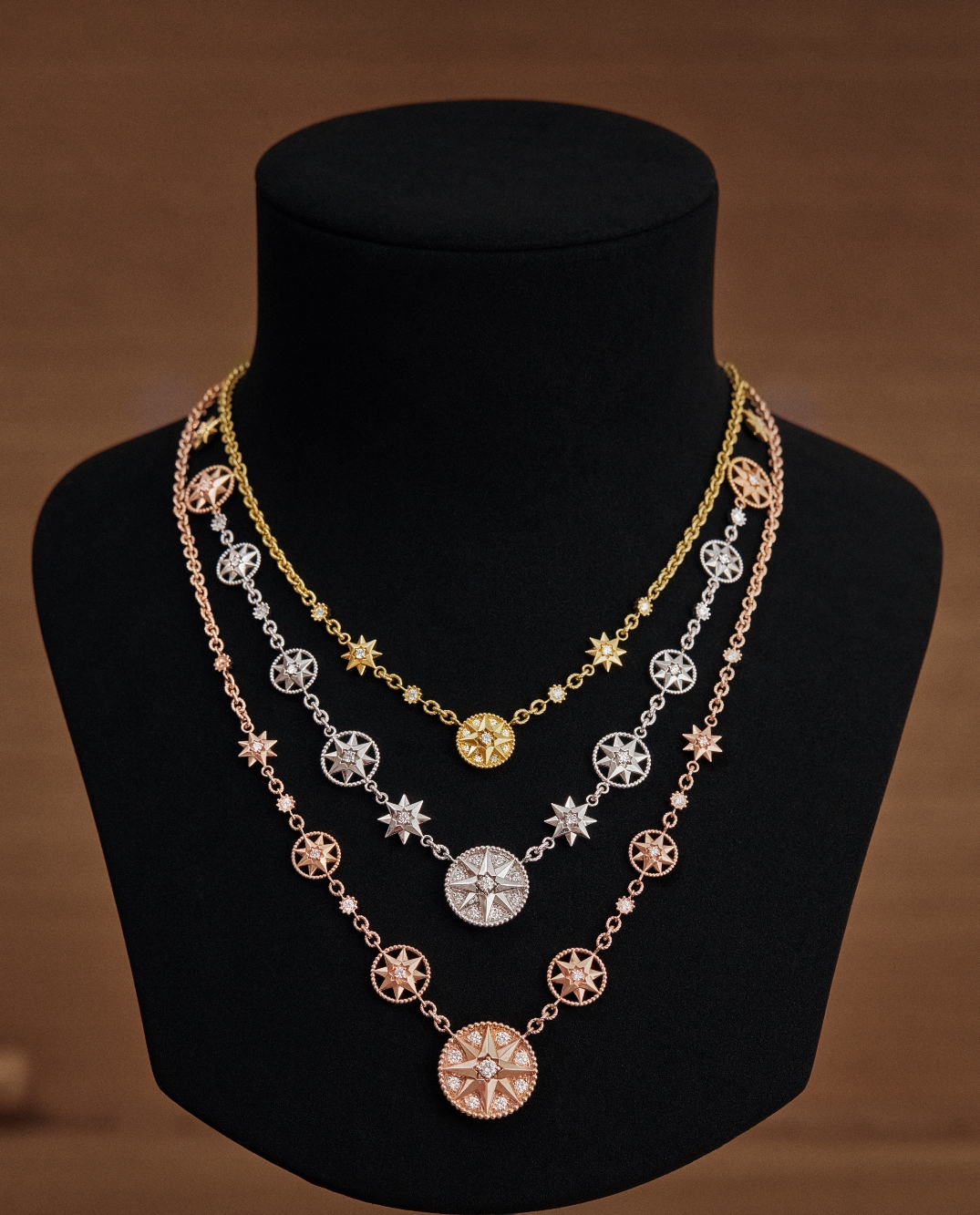
Conceived in 2015 under the direction of Victoire de Castellane, Rose des Vents remains one of Dior Joaillerie’s most enduring fine jewellery narratives. The collection draws its origin from the mosaic compass rose in the garden of Christian Dior’s childhood home in Granville, Les Rhumbs. That star — which the couturier regarded as a guiding sign — has since evolved into a recurring emblem within the House’s jewellery vocabulary. The Étoile des Vents chapter extends this lineage with white gold creations set with the eight-pointed lucky star. The shift into white gold introduces a cooler luminosity, while diamonds punctuate the compass motif. Necklaces and bracelets in rose gold and white gold establish a dialogue between Rose des Vents and Étoile des Vents, linking the original medallion to its celestial reinterpretation.
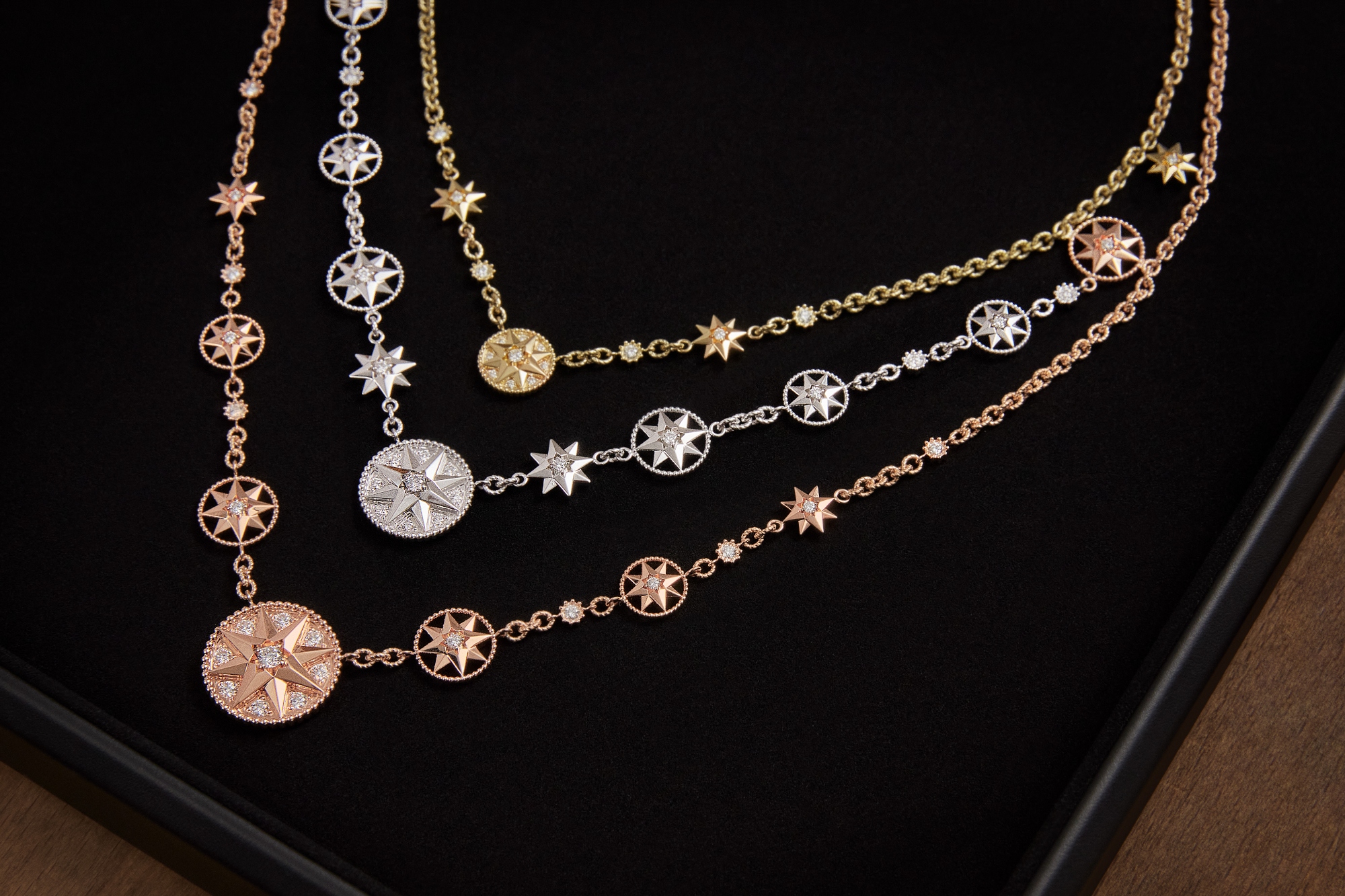
The collection sees long necklaces gather together charms that recur throughout Dior’s symbolic universe — lily of the valley, hearts, roses, skulls, ivy and bees — each element rooted in personal superstition and House mythology. Suspended along a single chain that act as narrative markers, echoing Monsieur Dior’s belief in signs and destiny. For Dior, the Étoile des Vents extends the House’s narrative through wind rose and celestial motifs. These pieces evoke the idea of navigating one’s life journey, echoing Christian Dior’s own star-crossed inspiration for founding the Maison. The compass rose and lucky star suggest navigation rather than chance. They propose direction, self-determination and the quiet assertion of one’s own bearings.
CHANEL’s CHANCE de CHANEL
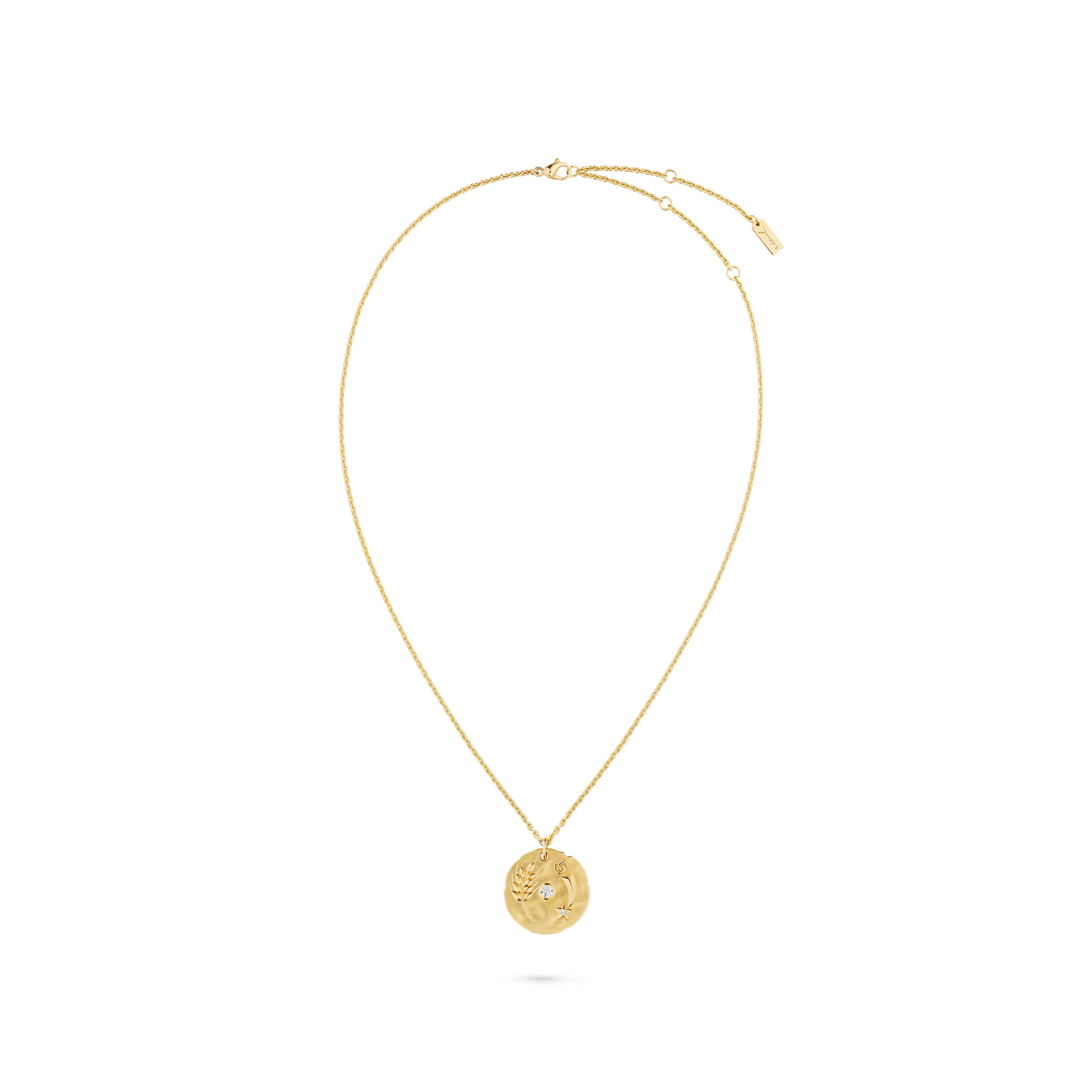
“Luck is a way of being,” the late Gabrielle Chanel famously asserted, positioning fortune as a philosophy that underpins CHANCE de CHANEL — a fine jewellery proposition conceived as a modern talisman. The collection comprises two reversible medallions — dubbed SYMBOLES and TALISMANS — each stamped with emblems drawn from Chanel’s personal lexicon and signed with Gabrielle Chanel’s handwritten signature. Designed to be worn on both sides, the medals reflect her belief that the visible and the invisible should be considered with equal rigour.
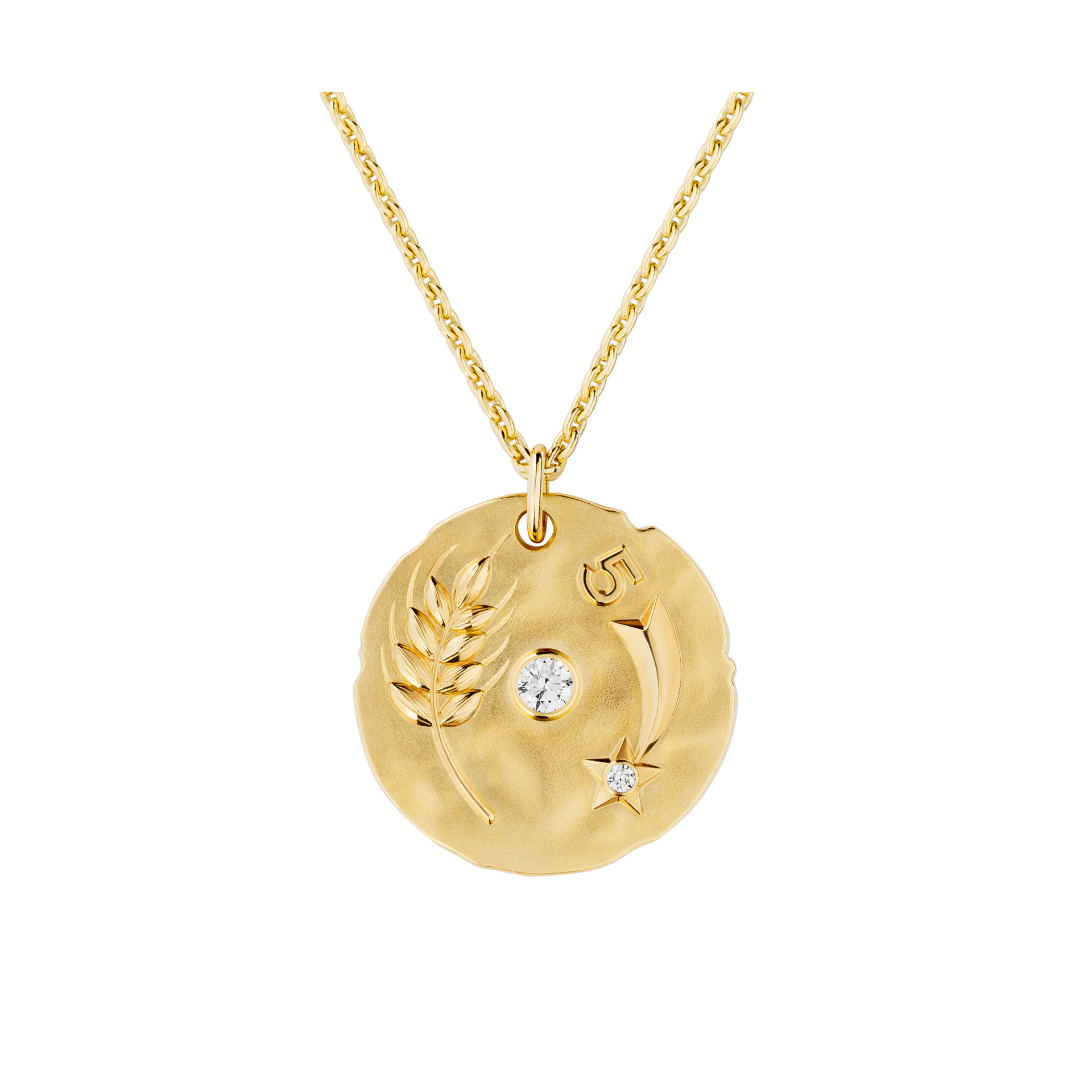
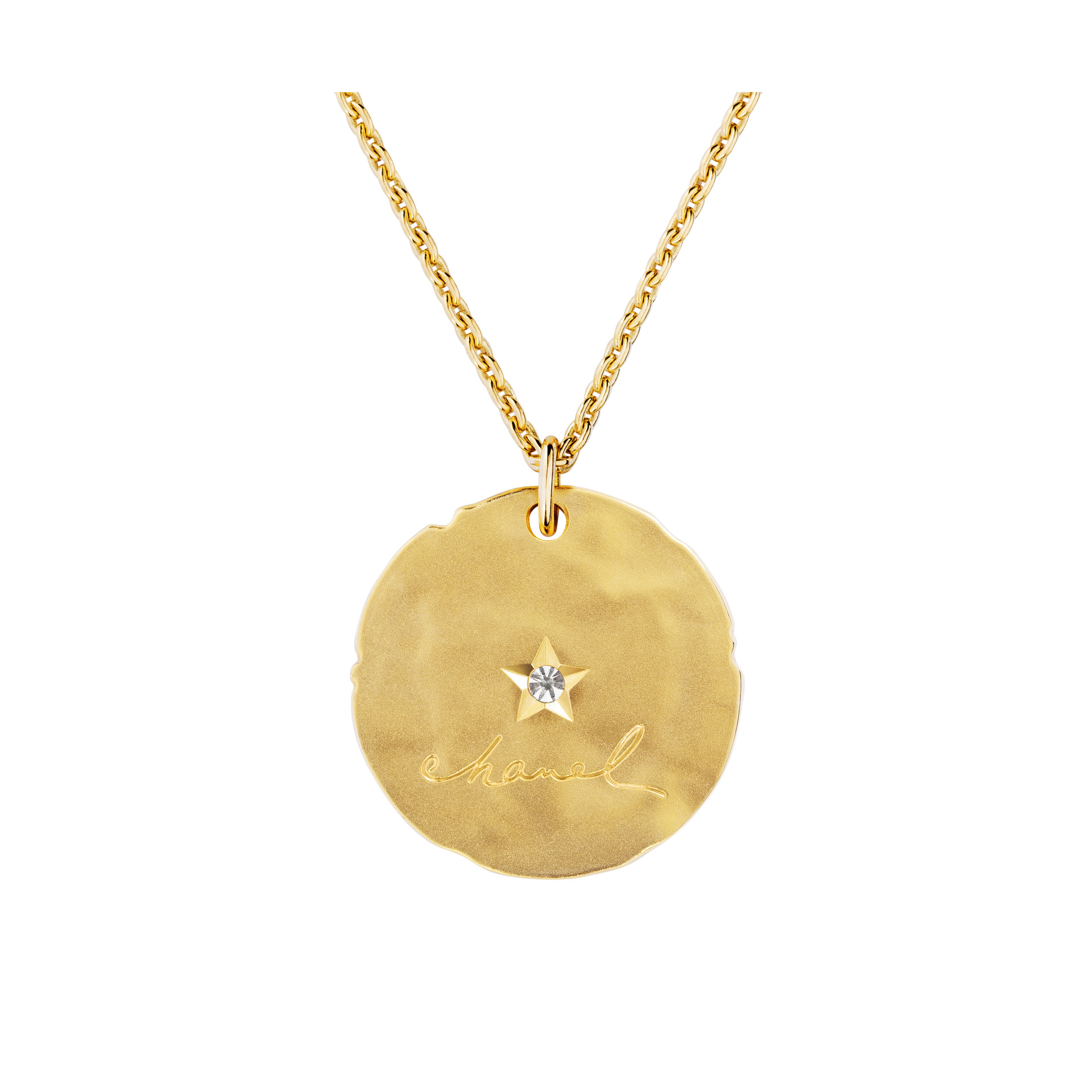
The TALISMANS medal — shaped with irregular edges reminiscent of an antique coin — gathers three symbols closely associated with Chanel’s own superstition: the Ear of Wheat for prosperity, the number 5 as her lucky numeral and the Comet, long understood within the House as a guiding star. Two diamonds — totalling 0.15 carats — punctuate the composition while alternating matte and polished finishes add to the play of light. On the reverse, her signature appears beneath a diamond-set star.
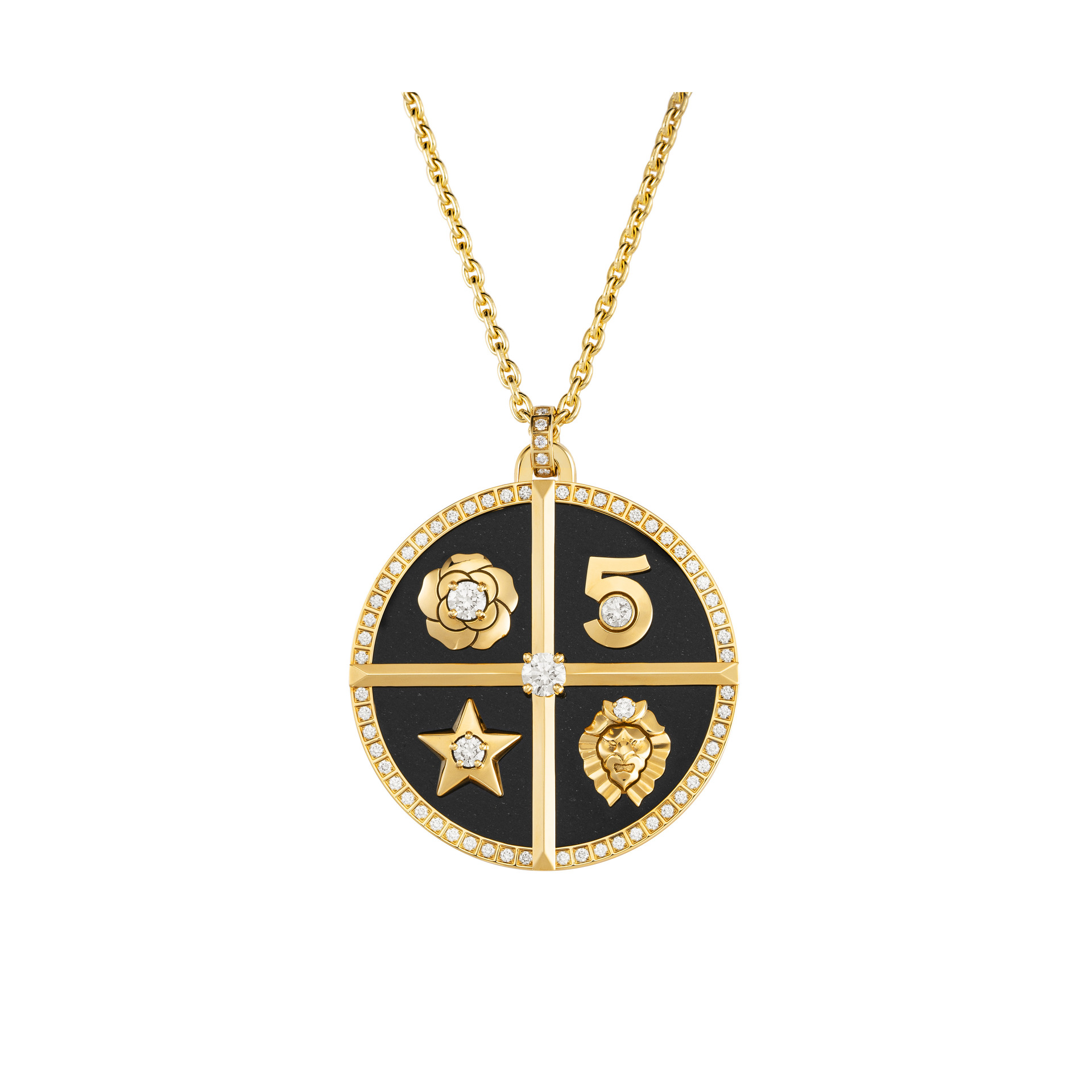
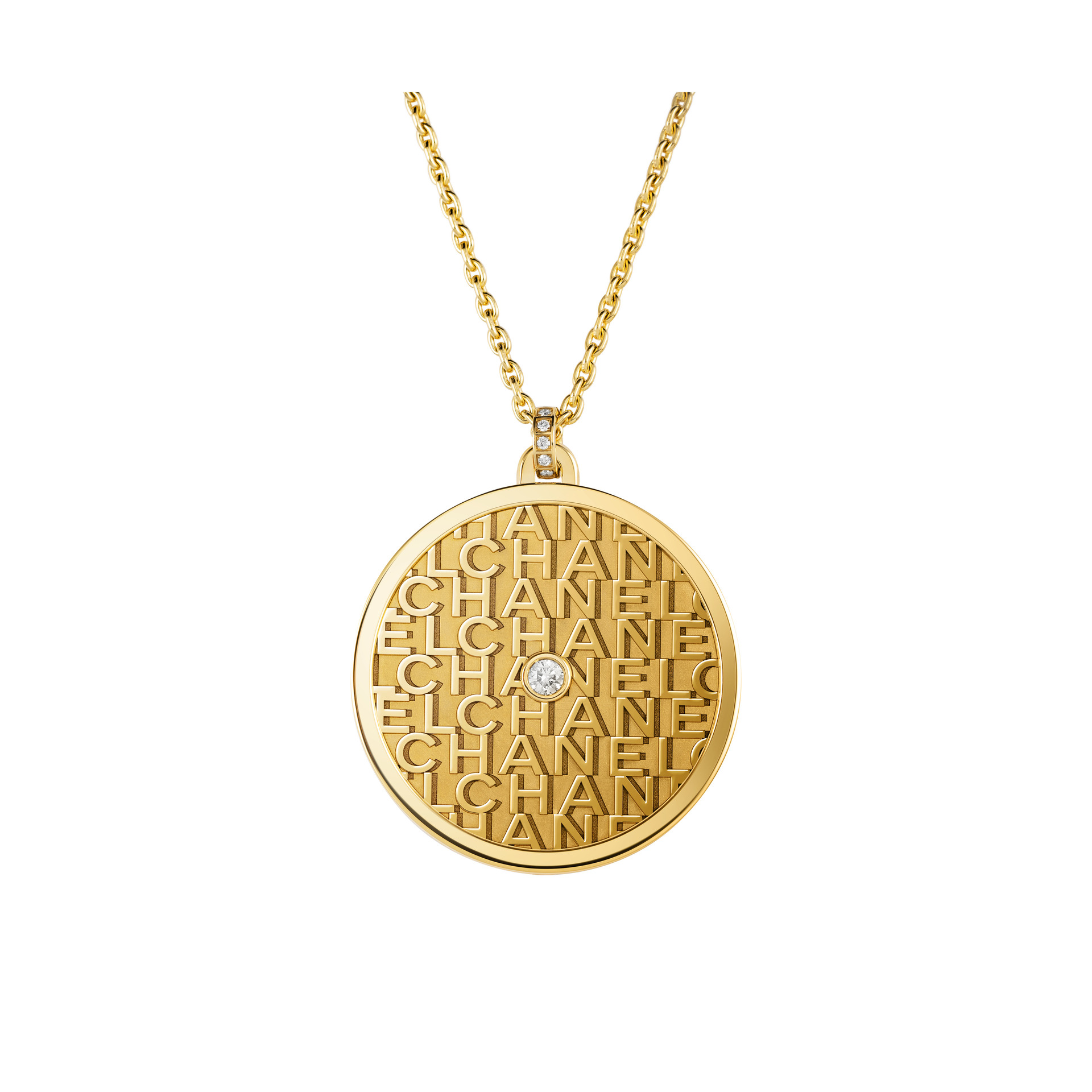
The SYMBOLES medal adopts a more graphic structure. Set against a plaque of untreated black jade framed in gold and edged with 74 diamonds, it brings together five of the House’s most enduring motifs: the Comet, first seen in the 1932 Bijoux de Diamants collection; the Camellia; the Lion, reflecting Chanel’s astrological sign; the Ear of Wheat and the number 5. The reverse features a laser-engraved bas-relief repeating ‘CHANEL’, centred with a 0.10 carat diamond — a technique borrowed from watchmaking. Both medals are suspended from adjustable chains, encouraging layering with existing collections including Coco Crush, N°5, Camélia, Comète and Ruban.
Van Cleef & Arpels’ Alhambra
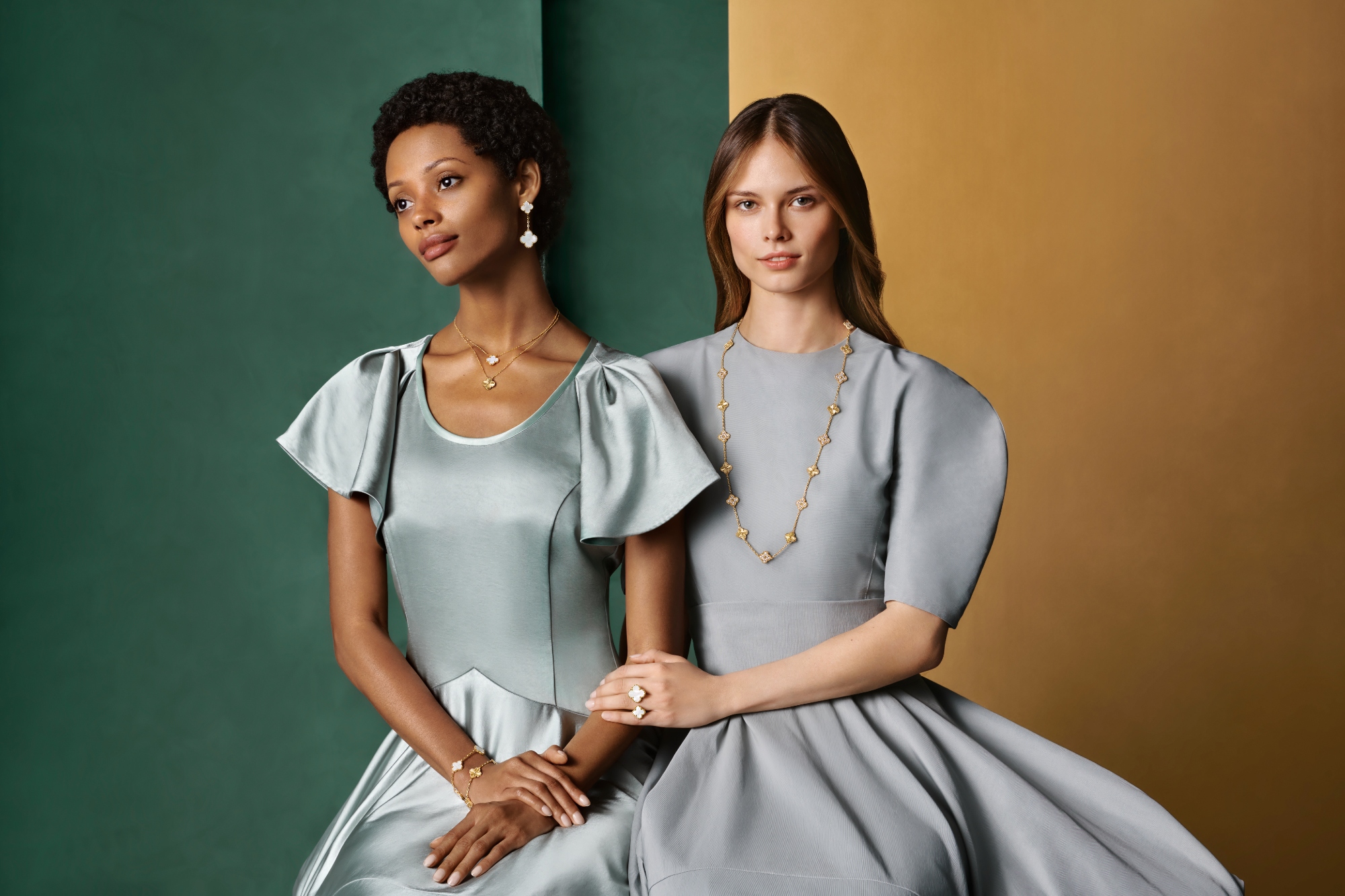
“To be lucky, you have to believe in luck,” as Jacques Arpels — Estelle Arpels’ nephew — used to say. Luck is a quality that the Maison holds dear, guiding its footsteps and inspiring some of its most emblematic creations. Case in point: the Alhambra. Created in 1968, the Alhambra remains one of Van Cleef & Arpels’ most recognisable expressions of luck. Inspired by the four-leaf clover, the motif formalised a belief long held within the House: that luck favours those who recognise and cultivate it. Jacques Arpels was known to collect clovers and gift them as tokens of encouragement. The first Alhambra long necklace — composed of twenty creased gold motifs edged with delicate beading — transformed a folkloric emblem into a refined design code. Its success established the clover as a permanent marker of harmony and benevolent fortune within the Maison’s visual identity.
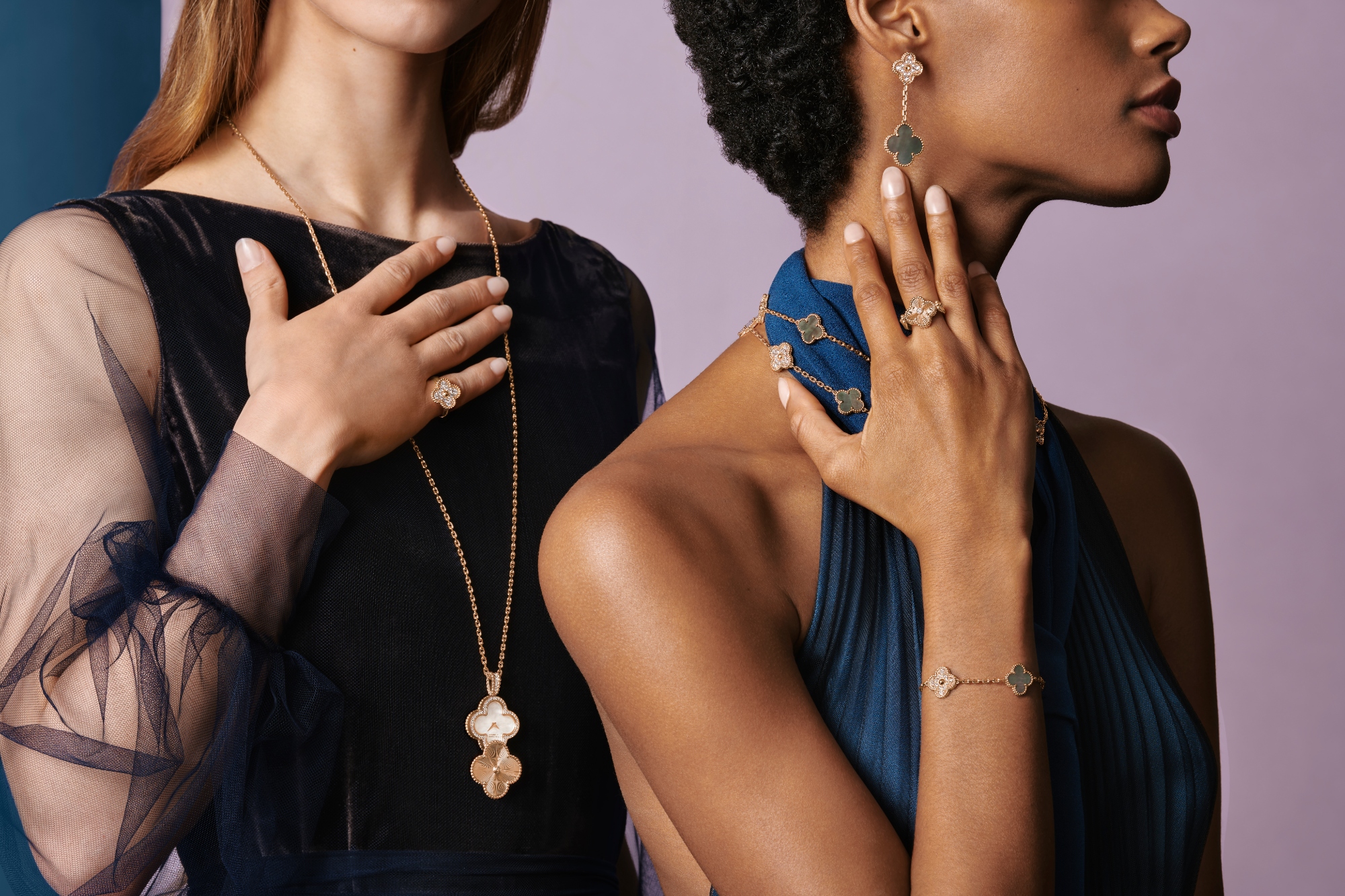
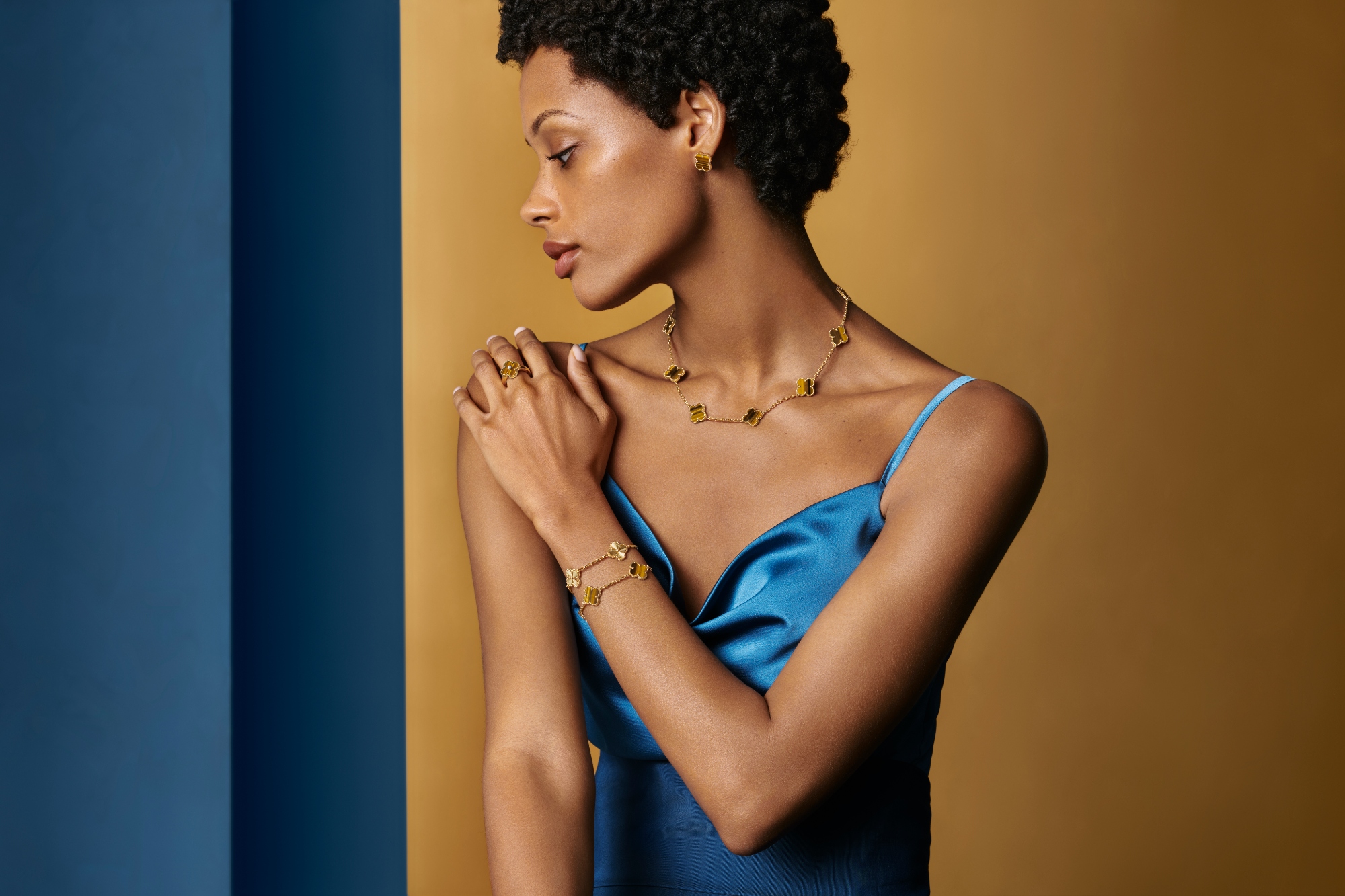
Recent iterations reaffirm that talismanic intent. Grey mother-of-pearl in pink gold introduces a soft iridescence associated with protection and gentleness, while onyx set in white gold sharpens the motif with graphic contrast. Limited editions in lapis lazuli and rock crystal extend the narrative of celestial depth and clarity, materials historically linked to royalty and spiritual insight. More than five decades on, Alhambra’s endurance lies in its constancy. The beaded contour, the central golden bead, the disciplined symmetry — each detail underscores how the notion of luck can be distilled into a signature form.
Qeelin Wulu Petite Pearl
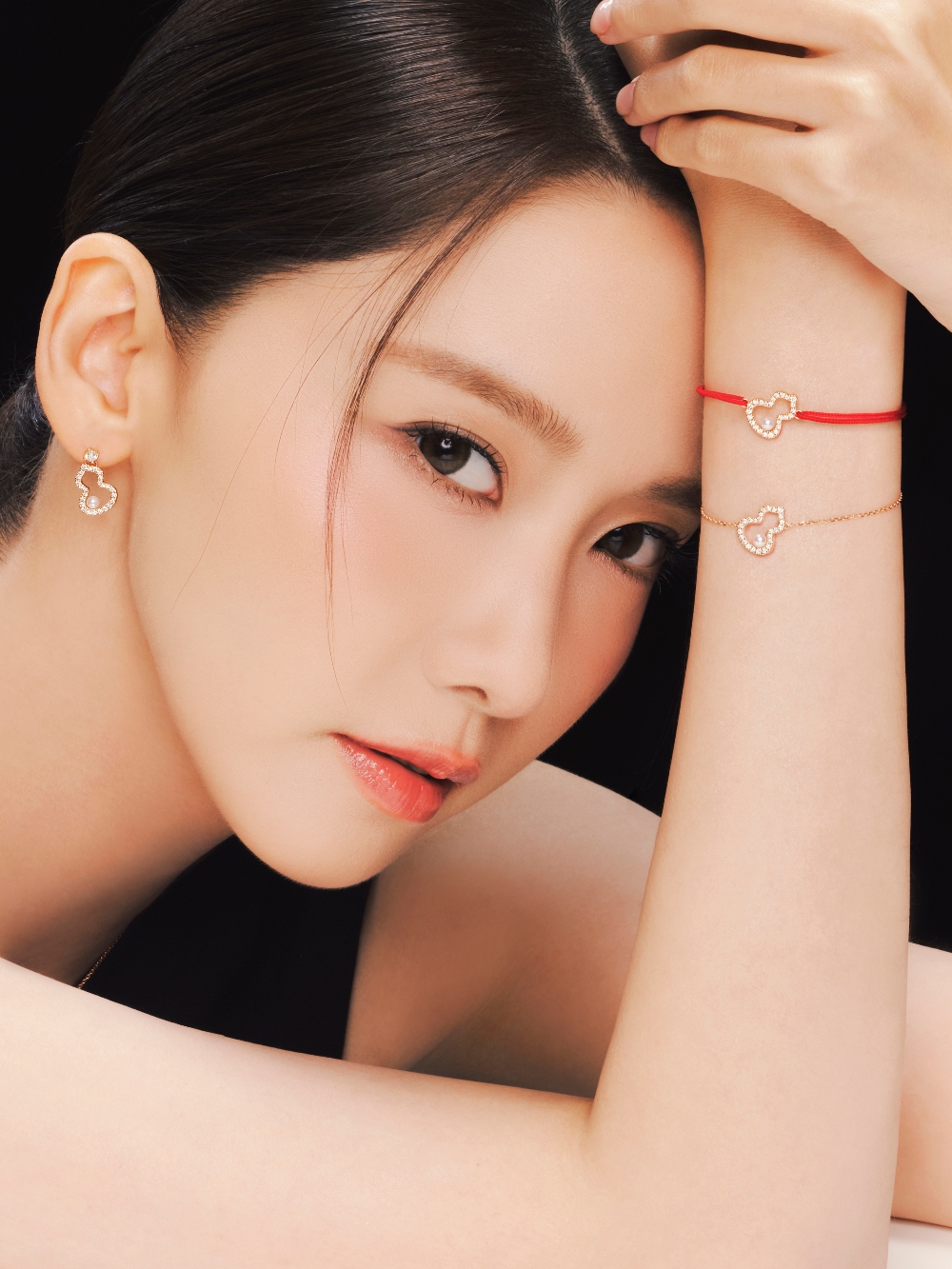
Few contemporary fine jewellery houses embed the concept of luck as intrinsically as Qeelin. At the centre of its design language stands Wulu, the stylised gourd that has become the brand’s most recognisable emblem. In Chinese culture, the gourd is a longstanding symbol of protection, prosperity and positive energy, historically believed to absorb negative forces while safeguarding the wearer. Qeelin translates this auspicious form into a modern reinterpretation rendered in jade, pavé diamonds, coloured gemstones and — more recently — luminous Akoya pearl
Read more from original article, all rights reserved From Clovers to Infinity: Fine Jewellery Staples for International Women’s Day
Leave a Reply