

Asia’s leisure boating industry operates in a complex environment, requiring a clear understanding of the region’s unique characteristics to identify opportunities and address challenges.
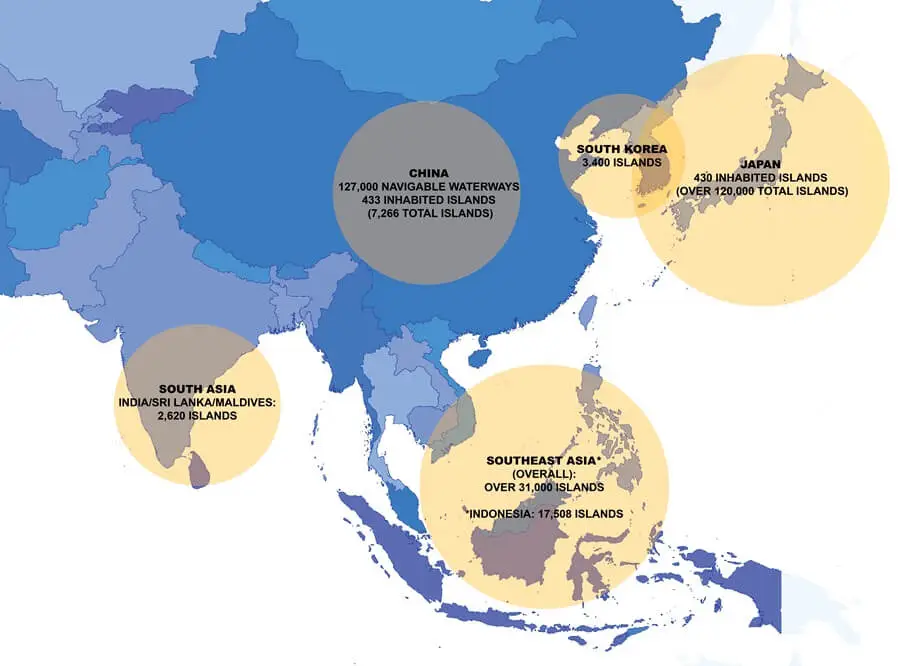
With over 60,000km of coastline, thousands of islands and favourable climates, Asia supports year-round recreational boating. Its strategic location between the Pacific and Indian Oceans, along with expanding infrastructure, makes it a key waypoint for global yachting.
Asia’s maritime heritage has shaped global history through centuries of seafaring, trade and advanced shipbuilding. This legacy enabled early globalisation, fostering trade and cultural exchange across the region.
Mastery of maritime sciences and strategic sea routes continues to influence modern maritime law and diplomacy. Key waterways, such as the Straits of Malacca, remain vital to regional economies and are expected to face capacity challenges, underscoring their ongoing importance in Southeast Asia.
HOME TO GLOBAL ECONOMIC POWERHOUSES
Asia is experiencing strong economic growth, especially within ASEAN, which has nearly 630 million people and recent annual GDP growth of nearly 5 per cent. The ASEAN Economic Community Strategic Plan 2026-2030 aims to make the region the world’s fourth largest economy. Despite global political challenges, ASEAN is focusing on job creation, education, digital economy, infrastructure and integration.
However, maritime disputes and declining fish stocks present coastal challenges. Prioritising local economic development and exploring green and blue economy opportunities are essential for sustainable welfare.

China is now the world’s second-largest economy, with a nominal GDP over US$19 trillion, contributing about 30 per cent to global economic growth. It leads in manufacturing and exports, shipping goods valued at over US$3 trillion annually. China’s financial strength is evident in its large foreign exchange reserves, while the services sector offers further growth potential.
India, the world’s fifth-largest economy, is expected to sustain rapid gr
Read more from original article, all rights reserved ICOMIA Market Insights: Pathways in Asia
Leave a Reply